


Land-based search and rescue training in Aotearoa New Zealand has undergone substantial change, yet there has been limited examination of how these changes have affected the analytical foundations of search management. This review was undertaken to identify what concepts, tools and competencies have been retained, modified or lost in the Managing Land Search Operations course that evolved into Manage the Initial Response and Extended Search Planning. Using 8 analytical domains and a continuity scoring approach, this longitudinal review examined the evolution of 3 core courses. Findings indicate improvements in operational rhythm, interoperability, safety and alignment with the country’s Coordinated Incident Management System. However, these gains are accompanied by a reduction in analytical depth, probability-based reasoning and decision traceability. Key frameworks, including the Probability of Success equation and the Bike Wheel model, have been simplified without clear justification. This review concludes with recommendations to restore analytical foundations and strengthen evidence-based decision-making within the search and rescue training system.
Introduction
Aotearoa New Zealand’s land-based search and rescue system relies heavily on well-trained volunteers (LandSAR 2022). Recent search and rescue evaluation reports, and their analysis in prior research, demonstrated that several themes appear consistently across operations, suggesting systemic challenges and recurring opportunities for refinement (NZSAR 2020a; NZSAR 2025; Curd et al. 2026). In response, this study examined the search and rescue training doctrine to assess whether the issues observed in practice were reflected in the instructional materials.
This analysis reviewed 3 cornerstone documents: the legacy Managing Land Search Operation courses of 2007–2011 (SARINZ 2007; 2008; 2011) and its successors, the contemporary Manage the Initial Response (NZSAR 2024) and the extended planning pathway delivered through the Extended Search Planning course (NZSAR 2021). Together, these represent 20 years of doctrinal evolution that shapes how land-based search and rescue volunteers learn to plan, assess evidence, manage risk and operate within the Coordinated Incident Management (CIMS)-aligned structures during Category 1 (Police-led) land-based operations (New Zealand Government 2019: NZSAR 2021).
This review builds on the systematic literature on search and rescue non-government organisations in emergency management (Curd et al. 2025), which highlighted the increasing centrality of volunteer organisations in emergency responses. This highlights persistent challenges such as variable training, limited resourcing and inconsistent integration with statutory agencies. By analysing the training documents, this study explored how instructional design either mitigates or perpetuates those sector-wide issues.
Background
Curd et al. (2026) revealed recurring systemic themes across multiple operations, including training and capability development, planning and preparedness, information management and situational awareness, inter-agency coordination, communications, safety and risk management, logistics and resource management as well as continuous improvement. These patterns appeared across different operational contexts, suggesting enduring sector-wide issues rather than isolated events.
Among these themes, training and capability development alongside continuous improvement emerged most prominently. This observation prompted a closer examination of the training domain itself. By analysing the core doctrinal training materials, the study explored what type of training was being delivered, how doctrine frames operational decision-making and whether these materials address the capability gaps identified in operational evaluations.
Findings from a systematic literature review of search and rescue non-government organisations in emergency management events by Curd et al. (2025) reinforced the importance of this focus. The review highlighted search and rescue non-government organisations as critical contributors to emergency response, while often operating with limited resources and outside formal legislative integration. Within this context, training plays a central role to enable volunteer responders to function as ‘unpaid professionals’, supporting safe and effective operational outcomes. However, inconsistent funding and fragmented planning arrangements can weaken training continuity and risk long-term capability erosion.
The evaluation themes and training analysis align with academic evidence on search theory, incident management and organisational learning. Research emphasises the importance of analytical search planning, probability-based decision-making and clear evidence-to-decision pathways in improving search effectiveness and resource efficiency (Koester 2008; Stoffel and Stoffel 2017; Young 2022). Similarly, studies of incident management highlight that while procedural simplification and inter-operability can improve early operational rhythm, they may also reduce analytical depth and decision transparency if not supported by comprehensive learning systems and doctrinal feedback loops (Comfort 2007).
Examining the evolution of Managing Land Search Operations (MLSO) development into Managing the Initial Response (MTIR) and Extended Search Planning (ESP) training documents provides a bridge between operational evaluation findings and the wider research literature. By analysing how training doctrine has developed over time, this study clarified how training content, doctrinal framing and system integration collectively shape search and rescue capability and performance.
Method
Data source and scope
All materials analysed were drawn from search and rescue course resources and the Search and Rescue Institute of New Zealand Trust (SARINZ) archives as the authoritative documents. The review focused on land-based search and rescue training because Category 1 (CAT 1) searches, coordinated by NZ Police, form the operational interface with the emergency management sector (NZSAR 2021; Policing Act 20081). Maritime and aviation contexts were excluded to maintain jurisdictional clarity as these domains fall under Maritime New Zealand and RCCNZ pursuant to the Maritime Transport Act 19942 and Maritime Transport Amendment Act 2013.3 This allowed findings to apply directly to Police-led land search and rescue operations where inter-agency coordination and volunteer non-government organisation readiness are most critical.
No human participants nor personal data were involved and ethical principles of responsible representation were followed.
Inclusion and exclusion criteria
Documents were included if they were core instructional or doctrinal materials used to guide search and rescue practice including course workbooks, student reference texts and guideline documents covering initial response, Lost Person Behaviour (LPB) (Twardy and Koester 2005; Koester 2008) and search planning (Stoffel and Stoffel 2017). To capture doctrinal evolution, materials spanning 2007–2024 were selected, covering the transition from early MLSO workbooks to the ESP and MTIR streams. Only complete and substantive documents were retained.
Materials were excluded if they did not contribute directly to instructional content. This included assessment-only documents, refresher workbooks, duplicate editions and ancillary supplements. Manage the Marine Response materials were excluded due to their separate maritime jurisdiction.
The final number comprised 5 documents analysed in their original PDF form without pre-processing or reformatting:
- Managing Land Search Operations workbook – student text, Aug 2007, 67 pages (SARINZ 2007).
- Managing Land Search Operations MLSO - workbook Aug 2008, 70 pages (SARINZ 2008).
- Managing Land Search Operations - Initial Response course workbook, May 2011, 76 pages (SARINZ 2011).
- Extended Search Planning - Student Reference and SAR Guidelines, 73 pages (NZSAR 2021a).
- Manage the Initial Response - Student Reference with NZSAR Guidelines, 24 pages (NZSAR 2024).
Comparison procedure
The analysis used comparative content analysis combined with manual page-to-page comparison to identify wording changes and structural or doctrinal shifts (Bowen 2009). Original pagination and language were retained to maintain a transparent audit trail and ensure differences reflected substantive change rather than formatting variation.
A comparison grid was constructed with one row per page. Columns recorded page notes, likely matches in later editions and thematic tags. Anchor terms (e.g. GSMEAC SEE/LoD Bike Wheel) were used to assist navigation across documents.
Successive editions were reviewed in parallel using page-to-page comparison (page i to page i) following established approaches for tracing continuity in longitudinal document analysis (Krippendorff 2018; Mahoney and Rueschemeyer 2003). Additions, deletions, relocations and wording changes were recorded in the grid. Where structures closely aligned (e.g. MLSO 2007–2008; MLSO 2008–2011), continuity was prioritised.
Each page was assigned a preliminary similarity judgement based on content overlap and emphasis (Braun and Clarke 2006):
- High: Same concept taught with the same intent; wording may differ, but definitions, steps or tools remain effectively unchanged.
- Medium: Core idea still present but meaningfully rephrased, reordered or partially expanded/trimmed.
- Low: Topic loosely related but scope or mechanism materially changed.
- No match: Content added removed or relocated with no clear link to earlier doctrine.
Mapping the 2011 split into ESP and MTIR
For the transition from MLSO 2011 to ESP and MTIR, each page was matched to the closest destination page using headings, repeated phrases and key terms. Destination pages and brief rationales (e.g. ‘moved to ESP—SEE/LoD–POA workflow’) were recorded. Where no successor existed, content was logged as removed or new (Fereday and Muir-Cochrane 2006).
Representative pages indicating doctrinal shifts were redlined by hand with deletions struck through, insertions underlined and definition changes noted in the margins. Where meaning was conveyed through tables or diagrams, annotations referenced surrounding text and identified diagram-led changes (Braun and Clarke 2006: Fereday and Muir-Corchrane 2006).
A classification table logged occurrences of key concepts (e.g. LPB Bike Wheel IAPs POA/POD/POS SEE/LoD suspension/demobilisation CIS) with page references and change notes. Each entry was coded by change type (e.g. moved to ESP, moved to MTIR, removed, new wording, changed) to distinguish editorial edits from doctrinal shifts (Mahoney and Rueschemeyer 2003).
Unclear mappings were revisited after a delay to reduce cognitive bias and cross-checked against table-of-contents and anchor-term scans (Prior 2003). Pages dominated by diagrams or non-extractable tables were interpreted using surrounding explanatory text (Bowen 2009).
Analytical approach
The study used a framework-based deductive-inductive thematic analysis combined with comparative content analysis and diachronic comparison (Braun and Clarke 2006; Fereday and Muir-Cochrane 2006; Gale et al. 2013; Mahoney and Rueschemeyer 2003). This approach enabled the analysis to identify patterns of continuity and change across successive editions while distinguishing substantive doctrinal shifts from changes in wording, structure or presentation.
The coding framework brought together the 8 thematic domains and the similarity judgements described above, with each coded unit accompanied by a brief note documenting the relevant change. This provided a consistent basis for tracing how instructional concepts were retained, modified, relocated, introduced or removed across the training materials.
Thematic domains and their derivations
The thematic domains were derived from a prior document analysis of NZSAR SAREx evaluation reports (NZSAR 2025; Curd et al. 2026). In that study, inductive coding identified recurring strengths, gaps and recommendations, which were consolidated into higher-order categories through axial coding (Fereday and Muir-Cochrane 2006). Eight cross-cutting domains consistently accounted for the findings (New Zealand Government 2019; NZSAR 2020b), being:
- training and capability development
- planning and preparedness
- information management and situational awareness
- inter-agency coordination
- communications
- safety and risk management
- logistics and resources
- continuous improvement.
These domains captured the majority of issues observed in search and rescue exercise evaluations while remaining concise enough to avoid excessive fragmentation (Bowen 2009; Krippendorff 2018). They also aligned directly with Coordinated Incident Management System (CIMS) and Incident Management Team (IMT) functions (New Zealand Government 2019).
Application and validity
The domains were applied as deductive tags at the page level and assigned only where content materially influenced operational practice. Multi-tagging was permitted when pages spanned multiple IMT functions. Boundary decisions followed the test: Would this content change what an IMT function does in practice?
Construct validity was strengthened by cross-checking domains against national doctrine (CIMS functions) and common IMT products, such as Initial Action Plans (IAP), Situation Reports (SITREPs), operational briefing templates (GSMEAC) and debrief forms (New Zealand Government 2019; NZSAR 2020b). Similarity judgements were applied consistently, with ambiguous cases conservatively coded as ‘Low’ and revisited during reconciliation. Notes documenting how content changed or moved supported aggregation and the construction of a longitudinal account of doctrinal evolution.
Findings
Training and capability development
The progression from MLSO to MTIR and ESP strengthens early confidence and standardises core search and rescue planning practices including briefings, IAP structure and Lost Person Behaviour-informed tasking (see Table 1). MLSO provides the foundation in probability and search theory, MTIR focuses on first-period execution and rapid evidence capture. ESP formalises multi-period planning through SITREP/IAP rhythm, Search Effort Evaluation/ Level of Detection (SEE/LoD) use and Probability of Area (POA) re-apportionment. This sequencing aligns with CIMS functions, supporting transfer into broader emergency management environments.
However, long-term competency depends on structured progression and assessment consistency. Learners may pass MTIR with form completion rather than demonstrated decision quality, such as applying SEE/LoD evidence to adjust POA or conducting basic sensitivity checks (e.g. ‘If LoD varies ±10% does POA change?’). This matters because practice increasingly relies on SEE/LoD and emergency services agencies caution against uncontextualised Probability of Detection (POD) assumptions (Frost and Stone 2001; Hill 2012; SARINZ 2013; Stoffel and Stoffel 2017). Competence therefore needs to be demonstrated across the evidence→reasoning→decision chain (NZSAR 2021; Mahoney and Rueschemeyer 2003).
Two training design implications follow. First, a clear learning pathway (MLSO→MTIR→ ESP→advanced/function-specific training) should emphasise ongoing practice and mentoring rather than treating ESP as a terminal qualification, supporting sustained capability development (Nurmiati et al. 2024). Second, assessments should include short, scored analytical tasks, such as POA recalculation from SEE/LoD or brief sensitivity note, consistent with search theory’s emphasis on combining LPB heuristics with evidence-based re-planning (Koester 2008; Perkins 2013; Stoffel and Stoffel 2017).
Assessment should also align closely with the CIMS by requiring scenarios and logs that demonstrate traceable POA adjustments supported by SEE/LoD forms or field debriefs. A simple ‘assumptions and tests’ note within IAPs could improve transparency and allow partner agencies to follow search logic and uncertainty (Hill 2012).
Prioritising decision quality, evidence handling and analytical clarity would strengthen transferable planning skills and reinforce disciplined, auditable practice. Over time, this would support stronger interoperability between volunteer and statutory responders and enhance sector readiness (Yazdani and Haghani 2024).
Table 1: Training and capability development across the training documents.
| Course | Core focus | Key competencies and practices | Assessment gaps/issues | Recommendation and implications |
| MLSO | Introduced foundational probability and planning literacy. | Core Search Theory (POA×POD=Probability of Success (POS)); Lost Person Behaviour (LPB)-based reflex tasking; initial analytical reasoning. | Heavy reliance on narrative over analytical reasoning. | Retain as conceptual foundation, used to explain uncertainty and evidence logic, anchor volunteer understanding of probability frameworks for later CIMS-aligned courses. |
| MTIR | Rapid first-period execution and evidence capture. | Initial Planning Point (IPP) establishment, direction of travel, LPB cue collection, task reporting. | Assessment favours form completion over reasoning, no POA re-weighting or sensitivity checks. | Add scored analytical tasks computing POA changes from SEE/LoD, require ±10% sensitivity testing, reinforces decision competence and readiness for ESP. |
| ESP | Structured planning cycle intelligence integration and iterative re-tasking. | SITREP/IAP cadence, SEE/LoD integration, POA re-apportionment, evidence-driven planning. | Documentation outweighs analytical quality, POD→SEE/LoD shift lacks validation, weak evidence traceability. | Require ‘assumptions and tests’ section linking decisions to evidence, include traceable POA changes, align outputs with CIMS planning intelligence and operations functions for defensibility and interoperability. |
Planning and preparedness
Across MLSO, MTIR and ESP, planning cadence becomes clearer and faster, yet traceability is inconsistent. ESP expects planners to show how new evidence changes plans between operational periods (see Table 2) but many exemplars do not record explicit POA changes with supporting evidence (e.g. Region B: 0.25→0.15 based on Team 3 SEE/LoD + clue X). MTIR performed well in first-period tasking using LPB, Bike Wheel and GSMEAC, but often lacked a concise ‘assumptions and tests’ note linking debrief insights to subsequent decisions. Without this bridge, planners must reconstruct reasoning from fragments rather than documented logic.
Earlier MLSO editions (SARINZ 2007, 2008) provided the clearest probability framework explicitly teaching POA×POD=Probability of Success (POS) and demonstrating how segmentation, evidence and detection effort reshape POA. ESP relies on SEE/LoD and scenario re-weighting, yet the shift from POD to SEE/LoD is not clearly justified nor aligned with international search planning practice (Frost and Stone 2001; Stoffel and Stoffel 2017). Records showing POA before and after adjustments, critical for analytical continuity and inter-agency understanding, were also inconsistently documented in IAPs.
Escalation cues signalling when planners should move from heuristic tasking to more analytical planning cycles are rarely recorded. Tools, such as the Bike Wheel, LPB zones and the speed–efficiency–thoroughness model effectively guide initial deployment, but without clear triggers, planners may remain in investigative mode too long. As a result, re-segmentation, scenario re-weighting and SEE-based POA reassessment may be delayed.
The consequences are significant. Plans may appear structured but without visible evidence→POA→tasking logic and prioritisation can appear qualitative rather than analytical. This reduces decision transparency and confidence among emergency management agencies and incoming IMT personnel. Failure to record escalation triggers and POA changes ultimately limits auditability, slows coordination and weakens trust. These are challenges that are also identified in broader emergency management interoperability research (Yazdani and Haghani 2024).
Table 2: Planning and preparedness across the training documents.
| Course | Core focus | Key competencies and practices | Assessment gaps/issues | Recommendation and implications |
| MLSO | Introduced the full probability narrative and analytical framework for search planning. | POAxPOD=POS, segmentation and re-weighting, evidence-based POA recalculation. | Analytical rigour diluted in later courses, evidence→POA→tasking chain rarely reinforced. | Retain MLSO analytical narrative as foundational doctrine, embed POS formula and segmentation logic in all later modules, emphasise POA traceability to evidence and detection effort. |
| MTIR | Rapid first-period tasking and deployment planning. | Integrates LPB with Bike Wheel, GSMEAC briefs, initial deployment structure. | Post-task bridge missing, no ‘assumptions and tests’ footer, escalation triggers undocumented. | Add ‘assumptions and tests’ section in IAPs, record what is known/contested, formalise escalation criteria (e.g. stale clues, high-risk terrain) to trigger analytical reassessment. |
| ESP | Evidence-led multi-period planning and scenario re-weighting. | SEE/LoD integration, POA re-apportionment, scenario re-segmentation. | POA deltas not consistently shown, SEE/LoD substitution lacks validation, missing POS framework, weak evidence-to-decision linkage. | Require explicit POA-delta documentation with evidence sources (e.g. ‘Region B: 0.25 → 0.15 due to Team 3 SEE/LoD + clue X’), standardise trigger documentation, reinstate POAxPOD=POS or justify SEE/LoD equivalence to align with international best practice. |
Information management and situational awareness
Across MLSO, MTIR and ESP, information management and situational awareness have become more structured. ESP provides the clearest intelligence cycle, using SITREPs and debriefs intended to feed into POA updates (see Table 3). MTIR captures critical first-period information efficiently although handover processes are often implicit rather than formalised. MLSO established the conceptual foundations of information discipline, distinguishing coverage from detection and emphasising assumptions but relied more on narrative reporting than structured intelligence products.
Each course contributes distinct strengths. MLSO built foundational literacy in probability and information quality. MTIR supported rapid capture of IPP, direction of travel, LPB cues, hazards and task status and formed the basis for extended planning. ESP linked debrief evidence to scenario re-weighting and POA reallocation using SITREPs to maintain a Common Operating Picture (COP) while recognising analytical bias risks.
This progression reflects broader changes in emergency management intelligence practice. When MLSO was introduced in 2007, national intelligence doctrine was still developing and drew heavily on military models (NZFC 1998). ESP reflects a mature understanding of intelligence requirements, though it rarely cites provenance or contemporary intelligence standards (NZSIS 2025), which weakens methodological transparency.
The most consistent weakness across all courses was traceability. IAPs and SITREPs rarely show explicit evidence→POA→tasking logic. SEE/LoD thresholds lack citation, confidence/bias grading is inconsistently applied and visual products often lack interpretive notes explaining why priorities changed. These gaps limit internal decision rigour and limit inter-agency confidence.
Several practical improvements could address this. Planning products could include POA-delta tables with supporting evidence and confidence grading. MTIR would benefit from a standardised intelligence card summarising IPP scenarios, key clues, coverage notes and hazards. ESP could include worked examples demonstrating SEE/LoD→POA→POS reasoning and doctrinal updates should clearly identify evidence sources.
These refinements would better link evidence capture, analytical reasoning and doctrinal learning, combining MLSO’s conceptual depth, MTIR’s operational speed and ESP’s emerging evidence-led planning framework.
Table 3: Information management and situational awareness across the training documents.
| Course | Core focus | Key competencies and practices | Assessment gaps/issues | Recommendation and implications |
| MLSO | Builds conceptual literacy in probability documentation and information quality. | Distinguishes coverage vs detection, narrative debriefs, early CIMS-style intelligence thinking. | No formal intelligence cycle, inconsistent traceability, limited standardisation of outputs. | Retain conceptual grounding, reinstate coverage-detection distinctions, uses MLSO narratives to teach the rationale for structured intelligence practice and reliability awareness. |
| MTIR | Rapid capture and relay of first-period information. | Identifies IPP direction of travel LPB cues hazards and clues, updates IMT rapidly. | Informal handovers, no standardised intel card, missing provenance/confidence ratings, visuals disconnected from reasoning. | Introduces a standard Intel Card (IPP scenarios clues with confidence LoD notes hazards), requires confidence grading, link maps/visuals to interpretive notes. |
| ESP | Establishes a full intelligence cycle and evidence-driven updates. | Structured collection–analysis–dissemination rhythm, SEE/LoD-based debriefs, POA re-apportionment, bias awareness. | Weak evidence linkage for POA changes, missing provenance, inconsistent bias/confidence grading, visuals unexplained. | Include POA-delta tables with evidence citations, adds credibility/confidence grading, embed ‘decision test’ lines, provide worked SEE/LoD→POA→POS examples, tag doctrine with provenance sources. |
Inter-agency coordination
The progression from MLSO to MTIR to ESP reflects a steady strengthening of inter-agency coordination in search and rescue training, though consistency and traceability remain uneven. ESP aligns most closely with CIMS by embedding recognised roles and functions, multi-period planning and products, such as SITREPs and IAPs designed to interface with IMTs, Emergency Operation Centres (EOCs) and Emergency Coordination Centres (ECCs) (see Table 4). However, the reference imagery is still drawn from the CIMS 2nd Edition (New Zealand Government 2014) rather than the 3rd Edition (New Zealand Government 2019). MTIR delivers rapid clarity in the first operational period through structured briefings and tasking outputs yet often leaves inter-agency handover details, such as what information is required, by whom and in which format, implicit. MLSO, by contrast, provides an end-to-end governance framework but relies more on narrative than on transferable, standardised products.
Each framework contributes meaningfully to coordination. ESP’s strength lies in its alignment with the CIMS, providing emergency services organisations with familiar structures supported by SITREPs that sustain a COP. MTIR adds early-phase operational clarity through GSMEAC briefings, LPB analysis and Bike Wheel outputs, which provide rapid context for response action. MLSO remains foundational, defining how operations progress from activation through demobilisation and situating coordination within broader governance structures.
Despite these advances, several weaknesses persist. MTIR products rarely specify which agencies should receive key outputs or when. Template divergence across SITREP and IAP formats continues to slow interoperability and decision traceability is inconsistent, with few IAPs recording POA deltas or source evidence. Such exclusions undermine auditability and make it difficult for responding agencies to reconstruct planning logic.
Several low-friction changes could strengthen coordination. To reduce template divergence, IAPs and SITREPs should include a shared concordance header, such as a standardised top strip with period, version, author distribution list and contacts to add interoperability even if layouts differ. Decision traceability can be improved by requiring a short justification of each POA change per region or segment referencing SEE/LoD and clue logs. Notifications and requests for additional support from emergency service organisations should also be made explicit within IAPs, with boxes that specify which agencies must be notified under what conditions, and by what method.
Table 4: Inter-agency coordination across the training documents.
| Course | Core focus | Key competencies and practices | Assessment gaps/issues | Recommendation and implications |
| MLSO | Establishes whole-of-operation governance and partner integration framework. | Explains activation→demobilisation lifecycle governance structures and partner interfaces. | Narrative emphasis, few shared products, unclear data flows and partner requirements. | Retain governance framing, embed standardised coordination outputs (distribution lists contact logs), clarify evolving partner roles across phases. |
| MTIR | Rapid operational clarity and initial coordination in first period. | GSMEAC briefings IPP LPB and Bike Wheel outputs establish shared picture. | External partner needs often implicit, handovers inconsistently defined, template divergence reduces traceability. | Add Coordination Checklist to GSMEAC, standardise distribution logs, include partner-specific tasking hooks to improve readiness and auditability. |
| ESP | Sustained multi-agency coordination aligned with CIMS. | IAPs/SITREPs structured by CIMS functions; maintains COP across IMTs/EOCs/ECCs. | Still references CIMS 2nd Ed (2014), limited interoperability, missing POA justifications and partner triggers. | Update to CIMS 3rd Ed (2019), include Concordance Header (period version distribution), require POA justification notes with SEE/LoD sources, add emergency service organisation support requirement boxes in IAPs to improve cross-agency confidence. |
Communications
Communication practices have improved progressively across MLSO, MTIR and ESP but timeliness, interoperability and auditability remain uneven. MLSO contributes by situating communication within the whole-of-operation narrative emphasising documentation and handover discipline. However, it relies heavily on narrative logs rather than standardised items that can be readily shared across agencies. MTIR excels in the first operational period by delivering fast, structured GSMEAC briefings, early communication checks, frequency and channel assignments and clear sked timings. ESP extends this by embedding SITREP rhythm and multi-period distribution, providing mechanisms to sustain the COP. However, gaps persist and many ESP packs still lack clear version control, distribution logs and explicit hooks for public information coordination (see Table 5).
Each of the 3 streams offer strengths that are critical for effective operations. MLSO plays a foundational role by reinforcing why communication results must survive staff turnover and withstand external scrutiny, situating communications within governance and accountability frameworks. MTIR’s crisp GSMEAC briefs and simple message discipline means tasking in the first operation period is rapid and coherent, supported by early checks and channel assignments. ESP introduces greater structure with regular SITREPs designed to maintain a COP and integrate updates for public information and partners within the planning cycle. These strengths establish a foundation for effective communication, but uneven adoption undermines consistency.
Table 5: Communications across the training documents.
| Course | Core focus | Key competencies and practices | Assessment gaps/issues | Recommendation and implications |
| MLSO | Embeds communication within governance and accountability frameworks. | Emphasises documentation discipline and communication continuity across shifts. | Narrative logs dominate, poor interoperability, plans not easily shared. | Retain governance framing, introduce structured comms templates (versioned logs distribution records), reinforce auditability and cross-agency shareability. |
| MTIR | Tactical communication discipline and speed in first operational period. | GSMEAC briefings comms checks clear skeds rapid tasking clarity. | Incomplete tasking traceability, inconsistent SITREP/IAP radio logs, weak redundancy planning. | Standardise task trace log,; ensure key transmissions recorded in SITREPs/IAPs, include redundancy plans and partner-aligned communications templates. |
| ESP | Sustained multi-period communication supporting a COP. | Structured SITREPs multi-period distribution integration with Public Information. | Missing version/timestamp controls, interoperability gaps, ad hoc public communications, weak message-to-decision traceability. | Enforce version control and distribution logs, align comms plans with partner agencies, formalise public information role, embed evidence transmission records in SITREPs. |
Several weaknesses compromise the strength of communications. Across all streams, IAPs and SITREPs are sometimes distributed without unique version identifiers, timestamps or distribution logs. This leaves supporting emergency service organisations uncertain about which document to act upon. Interoperability also appeared problematic. While communication plans, channel plans and call signs exist, they do not always align with supporting emergency service organisations formats, requiring translation at critical moments. Tasking traceability is another gap. Evidence and information shared by radio are not consistently captured in SITREPs or IAPs, limiting the audit trail between field evidence, search clues, and planning decisions. Redundancy is inconsistently addressed with backup channels, relay points and loss-of-communications procedures rarely standardised or rehearsed.
Safety and risk management
Safety and risk management appear consistently across MLSO, MTIR and ESP, although integration and auditability vary. MTIR is strongest in the first operational period, emphasising rapid hazard identification, concise safety briefs and immediate controls that enable decisive action. ESP extends this into multi-period planning, embedding risk sections in IAPs, medical and rescue contingencies and integrating fatigue, demobilisation and CIS considerations. MLSO provides a broader conceptual framework linking safety to activation operations and demobilisation, although its guidance remains largely narrative and inconsistently templated (see Table 6).
Table 6: Safety and risk management across the training documents.
| Course | Core focus | Key competencies and practices | Assessment gaps/issues | Recommendation and implications |
| MLSO | Conceptual framework linking safety to activation operations and demobilisation. | Embeds safety through full lifecycle, links risk to governance and documentation. | Narrative style, lacks structured operational guidance for dynamic risk decisions. | Retain lifecycle framing, convert to structured templates linking hazard identification controls and verification, emphasise governance accountability and risk traceability. |
| MTIR | Tactical safety: rapid hazard identification and immediate controls in first period. | GSMEAC safety briefs, stop-work/re-task authority, rapid control implementation. | Weak risk traceability, rationale for changing risk levels seldom recorded, fatigue and supervision exceptions not justified. | Add risk change log in IAPs showing cause-and-effect, tie SEE/LoD data to evolving controls, require written justification for deviations from standard protocols. |
| ESP | Institutionalised risk management across multi-period operations. | Safety embedded in IAPs, includes medical fatigue demobilisation and CIS elements. | Risk changes lack rationale or evidence, thresholds for action rarely stated, CIS triggers unclear. | Include explicit evidence-based action thresholds in IAPs (e.g. ‘Cease ops if river > 1.2 m or forecast wind > 60 km/h’), link hazard evolution to field intel, formalise CIS escalation criteria and risk-justification statements for transparency. |
Each framework contributes strengths. MLSO situates safety within governance and lifecycle management, MTIR provides tactical clarity through GSMEAC briefings and stop-work authority and ESP embeds safety within the IAP cycle reinforcing risk as a continuous process. However, gaps persist that reduce traceability and accountability. IAPs rarely document why risk ratings change, such as river rise, treefall or reduced LoD/POD in hazardous terrain, and field evidence is seldom linked to later control measures. Fatigue and supervision exceptions for night or technical operations often lack written justification and CIS protocols vary in clarity and timing. Dynamic hazards, like weather or flooding, are noted in SITREPs but rarely include explicit thresholds for halting or adapting tactics.
Overall, while MTIR and ESP demonstrate progress towards structured safety integration, inconsistent documentation and weak evidence linkage limit auditability and organisational learning.
Logistics and resources
Logistics and resource management are evident across the MLSO, MTIR and ESP although visibility and auditability remain uneven. MLSO provides an end-to-end administrative framework, situating logistics within governance and demobilisation processes but relies heavily on narrative guidance rather than standardised, data-rich templates for inter-agency accountability. MTIR is strongest in the first operational period, enabling rapid mobilisation, team tracking and equipment checks. ESP extends logistics into multi-period planning, addressing personnel rotations, staging supply and facility management although links between tasking outputs coverage verification and re-task readiness remain inconsistent (see Table 7).
Table 7: Logistics and resources across the training documents.
| Course | Core focus | Key competencies and practices | Assessment gaps/issues | Recommendation and implications |
| MLSO | End-to-end governance and administrative logistics from activation to demobilisation. | Links logistics to governance cost recovery and documentation. | Narrative-heavy guidance, low visibility of real-time status, lacks structured multi-agency tools. | Retain lifecycle framing but adopt standardised templates (asset registers cost logs demobilisation records), emphasise traceability auditability and financial accountability. |
| MTIR | Rapid mobilisation and operational support in the first period. | Fast call-outs safety checks team tracking scheduling. | Weak linkage between deployment and coverage evidence, limited turnaround monitoring, reactive posture. | Standardise post-task reports with GPS/SEE/LoD data, use readiness dashboards for teams/equipment, anticipate POA shifts for proactive staging. |
| ESP | Multi-period logistics and team welfare integration. | Manages rotation medical transport and facility support, embeds demobilisation planning. | Resource tables lag behind POA priorities, bottlenecks untracked, ad hoc procurement. | Synchronise logistics planning with POA updates, visualise readiness and turnaround, standardise demobilisation and welfare logs, add lightweight procurement tracking actions and CIS follow-ups. |
Each framework contributes strengths. MLSO establishes whole-of-operation traceability, MTIR enables rapid early resourcing through clear team identification and call-out tracking and ESP integrates logistics into the IAP cycle, aligning personnel relief, transport and medical support with operational phases. Together, they form a layered logistics system though not yet a fully auditable one.
Significant gaps persist. Task debriefs often lack GPS tracks, photographs or LoD/POD data. This limits how planning can verify coverage or determine re-task readiness. Resource tables within IAPs frequently lag changing POA priorities, creating mismatches between search focus and available assets. Turnaround times between team recovery, equipment servicing and redeployment are rarely monitored, obscuring obscuring operational bottlenecks. Demobilisation tracking and procurement for extended operations also remain inconsistent.
Overall MLSO, MTIR and ESP demonstrate improved logistics discipline but further refinement is required to achieve reliable traceability, real-time visibility and proactive resource management across multi-agency search and rescue operations.
Continuous improvement
Debriefing is a consistent feature across MLSO, MTIR and ESP although its depth and influence on planning vary (see Table 8). At its most effective, debriefs capture objective evidence, such as SEE/LoD feedback, GPS tracks and photographs and translate these into clear rationale for POA changes in subsequent IAPs. This creates a learning loop where evidence informs planning (Somerville and Chatzipanagiotou 2015). When treated as optional or purely narrative, however, lessons remain anecdotal and rarely influence doctrine (Kikkawa and Mavin 2017).
Table 8: Continuous improvement across the training documents.
| Course | Core focus | Key competencies and practices | Assessment gaps/issues | Recommendation and implications |
| MLSO | Establishes the theoretical foundation linking probability to search effectiveness. | Embeds POA×POD=POS, legitimises debriefing, promotes lessons learned. | Debriefs inconsistently applied, limited structured evidence use, lessons not integrated. | Retain MLSO’s conceptual base, make debriefs mandatory, link findings directly to planning and doctrinal updates. |
| MTIR | Rapid evidence captured in first operational period. | Collects clues coverage and task outcomes, supports quick tactical learning. | Missing POD/SEE/LoD fields, weak POA rationale, narrative over evidence. | Standardise debrief forms, include POD/SEE/LoD and POA deltas, require documented rationale for planning changes. |
| ESP | Embeds iterative learning across operational periods. | Links task–debrief–POA update–IAP revision, integrates SEE/LoD data. | Evidence sources often implicit, POA inconsistently recorded, weak doctrinal traceability. | Mandate evidence citation for POA shifts, embed before/after POA tables, train planners in evidence-to-decision logic. |
Each framework contributes differently. MLSO provides the strongest theoretical foundation, embedding the POA×POD=POS framework and legitimising structured debriefing although its application often depended on local practice. MTIR prioritises rapid evidence capture but does not require formal LoD or coverage verification fields. ESP introduces a multi-period learning cycle, such as tasking debrief, SEE/LoD input, POA update and IAP revision. However, sources of change are frequently implicit and POA adjustments inconsistently documented. This limits planning transparency and inter-agency confidence.
A recurring weakness in MTIR and ESP is the absence of a documented evidence base explaining why changes occur. Without cited sources, doctrinal updates appear qualitative complicating inter-agency interpretation and limiting course refinement (Neelen and Kirschner 2020). Training therefore risks reinforcing routine practice rather than measurable improvement, leaving practitioners vulnerable to cognitive biases such as the Dunning–Kruger effect (Dunning 2011; Peake et al. 2020).
While MLSO, MTIR and ESP advance debriefing practice, they do not consistently close the loop between evidence capture, planning adjustment and doctrinal learning. Embedding explicit evidence trails in debriefs and IAPs, supported by stronger analytical training, would help convert continuous improvement from aspiration into demonstrable system performance (Cooper et al. 2003; Slavin 2020).
Discussion
This study analysed how land-based search and rescue training doctrine in New Zealand has evolved by comparing MLSO, MTIR and ESP. Using 8 domains drawn from SAR exercise evaluation findings, the study examined how training content, tools and decision-making approaches have changed over time. Overall, the results show stronger structure and interoperability, but weaker analytical depth, evidence traceability and use of probability in decision-making.
Competencies analysis
The IMT competency framework outlines requirements across personal attributes, planning processes, operational knowledge and continuous improvement. When assessed against MLSO, MTIR and ESP, there was strong alignment in many technical competencies. MLSO introduces deeper application of search theory, probability calculations and decision-making. MTIR builds competence in early incident management, including scenario development, tasking and the use of LPB. ESP extends these competencies into multi-operational period planning, incorporating scenario ranking, SEE and structured handovers. Together, these courses address most of the technical and planning skills expected.
A notable shortfall related to continuous improvement and organisational learning, which are explicit requirements within the IMT competency framework (New Zealand Government 2019; NZSAR 2020a 2020b). While the courses acknowledge debriefing and evaluation, guidance is conceptual. There is limited practical instruction on capturing, analysing and translating debrief findings into changes in plans training or doctrine. As a result, post-operation learning is often treated as an informal or local responsibility rather than a structured IMT function. This limits the ability of IMT members to demonstrate competency in closing the learning loop between response and preparedness and weakens evidence of compliance with competencies relating to lessons identified and continuous improvement (Neelen and Kirschner 2020).
The competency framework also expects capability in urban and suburban search contexts, including passive search techniques and the application of LPB beyond wilderness environments. However, current training materials remain strongly wilderness-focused. Without additional learning, IMT members may not fully meet competencies relating to suburban search operations (Young and Wehbring 2007; Koester 2008).
Overall, MLSO, MTIR and ESP provide a strong technical foundation, but additional training is required in areas such as suburban search organisational learning, personal wellbeing, volunteer conduct, media awareness and function-specific development to fully meet the competency framework.
International best practice and traceability
Contemporary search management doctrine emphasises traceability from evidence to decision. International frameworks, such as the United States National Search and Rescue Supplement (United States National Search and Rescue Committee 2020), the United Kingdom’s SAR strategy (JESIP 2024; UKSARC 2025) and Australia’s National Search and Rescue Manual (AMSA 2025), all expect analytical judgements, particularly POA adjustments and POD decisions, to be explicitly recorded, sourced and reproducible. This documentation discipline supports accountability and allows planners to reconstruct the reasoning behind operational decisions during multi-agency reviews.
Several common practices define international best practice. Version-controlled planning products, including IAPs, SITREPs and probability logs are treated as analytical records rather than administrative outputs. Evidence sources are embedded within tasking documentation with POD or coverage data linked to region identifiers and timestamped debriefs allowing residual POA to be independently verified (JIBC 2018; USCGRDC 2025). Bias control and confidence grading are also incorporated into analytic processes, helping decision-makers assess the strength of evidence across operational periods (JESIP 2024).
These practices provide a useful benchmark for New Zealand search and rescue training materials. MLSO introduced documentation discipline and the POA×POD=POS framework but relied largely on narrative reasoning. MTIR improved operational clarity but provided limited mechanisms for linking field evidence to revised planning assumptions. ESP integrated intelligence products, such as SITREPs and intelligence cycles, yet lacks the explicit provenance statements and POA or SEE/LoD records common in international systems. As a result, the logic of decision-making is often implicit rather than auditable.
This gap matters because traceability supports learning, evaluation and operational defensibility. Aligning this doctrine with international practice would require modest adjustments, including embedding evidence references within planning products, adopting confidence or bias grading and recording POA changes alongside their supporting evidence. These measures would strengthen transparency, improve analytical continuity and bring search and rescue documentation closer to international standards (New Zealand Government 2014).
SEE/LoD versus POD: incomplete equation and evidence deficit
A recurring weakness within contemporary search and rescue doctrine is the partial replacement of POD with the SEE and LoD frameworks without clear evidential or mathematical justification. In classical search theory, POS is derived from the complete relationship POA×POD=POS, where each variable is empirically or probabilistically estimated (Koopman 1946; Frost and Stone 2001; Cooper 2003; Koester 2008; Perkins 2013; Stoffel and Stoffel 2017). Current materials substitute SEE/LoD as proxies for search performance but do not quantify how these measures relate to detection probability or success outcomes. As a result, the relationship between search effort, likelihood of detection and probability of success becomes implied rather than demonstrable.
International search and rescue systems in the United States, Canada, the United Kingdom and Australia treat POD as an estimable and auditable parameter, often calculated using coverage factors derived from sweep width, effort and search area (JIBC 2018; USCGRDC 2025; AMSA 2025; UKSARC 2025). Where empirical data is limited, assumptions are documented and traceable through calculation logs or planning tools.
By contrast, the SEE/LoD framework used in ESP and MTIR offers operational simplicity but reduces analytical transparency and limits third-party verification. Without validation studies linking SEE/LoD categories to measurable detection outcomes, the framework remains evidentially unsupported. Re-establishing a quantified link between SEE/LoD and detection probability through field trials, retrospective analysis or retention of POD within the POA×POD=POS framework would restore methodological completeness and align New Zealand’s doctrine with internationally validated practice.

Figure 1: MLSO's Bike Wheel Model (SARINZ Trust 2007).
Printed with permission.
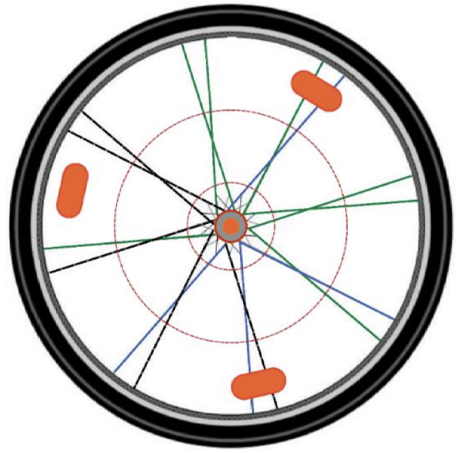
Figure 2: MTIR Bike Wheel Model (NZSAR 2014).
Printed with permission.
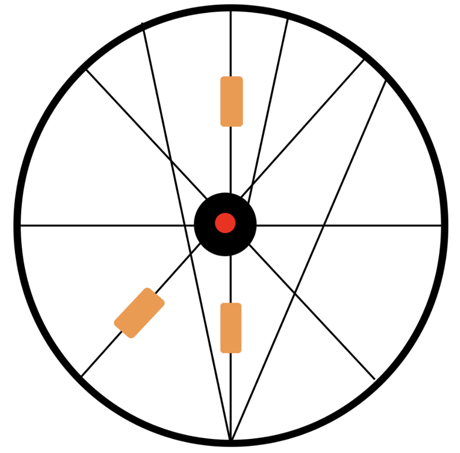
Figure 3: ESP Bike Wheel Model (NZSAR 2021).
Printed with permission.
The Bike Wheel Model: current state and required fixes
The Bike Wheel model was one of the most effective teaching tools introduced in the MLSO courses (SARINZ 2007). At its core, the model provided a structured yet flexible framework for reflex tasking, a cognitive map that connects LPB, terrain analysis and operational sequencing (see Figure 1). The outer rim represented the search environment, sectors, regions and terrain features, while each spoke represented a decision pathway or hypothesis to be tested. The hub symbolised information flow and coordination, ensuring that clues, information and team feedback were continuously centralised.
What made the original version sophisticated was its balance between simplicity of presentation and conceptual depth. It integrated behavioural probability, operational tempo and evidence feedback within a single visual metaphor. MLSO taught it not merely as a mnemonic, but as a dynamic model of search reasoning, a way to visualise hypotheses, prioritise sectors and control information loops under uncertainty.
In MTIR version 2024, the model was modernised but faithfully preserved in intent (see Figure 2). The adaptation correctly linked the Bike Wheel to CIMS functions and to the speed→efficiency→thoroughness progression showing how planners could cycle through rapid hypotheses in the first operational period before shifting to evidence-driven refinement. MTIR’s depiction of wilderness versus urban variants added valuable context clarifying how the model scales across different environments while retaining its cognitive architecture. In this respect MTIR successfully upheld the original sophistication within an operationally accessible framework.
By contrast ESP (NZSAR 2021) simplified the Bike Wheel (see Figure 3). The diagram was retained as a generic reference to ‘reflex tasking’ but its underlying logic was stripped of the analytical dimensions that once linked clues, evidence and scenario weighting. The hub no longer represented information centralisation, the spokes no longer corresponded to testable hypotheses and the visual grammar that once conveyed iterative statistical reasoning was reduced to a static reminder of ‘where to look first’.
This simplification reflects a limited appreciation of the model’s theoretical intent, treating it as a static diagram rather than as an evolving reasoning process. The result is a version that is easier to teach but detached from the decision science that gave it meaning. Learners can reproduce the image, but they are less equipped to apply the underlying logic of hypothesis testing, evidence review and iterative re-planning (see Figure 4). This trend mirrors a broader pattern of conceptual dilution across recent training materials, where simplification has come at the expense of analytical literacy.
Re-establishing this level of sophistication would not only restore the Bike Wheel’s original analytical intent (see Figure 4) but would also align New Zealand’s search and rescue doctrine with international best practice. Other international frameworks (e.g. USNSARC 2000; AMSA 2025) emphasise traceable reasoning and transparent documentation as hallmarks of professional search planning. Reconnecting the Bike Wheel model to its evidence-driven foundation would contribute to New Zealand’s reputation for innovative yet disciplined practice and allow the model to function as it was conceived: as a bridge between behavioural insight and operational planning and a living representation of structured reasoning under uncertainty.
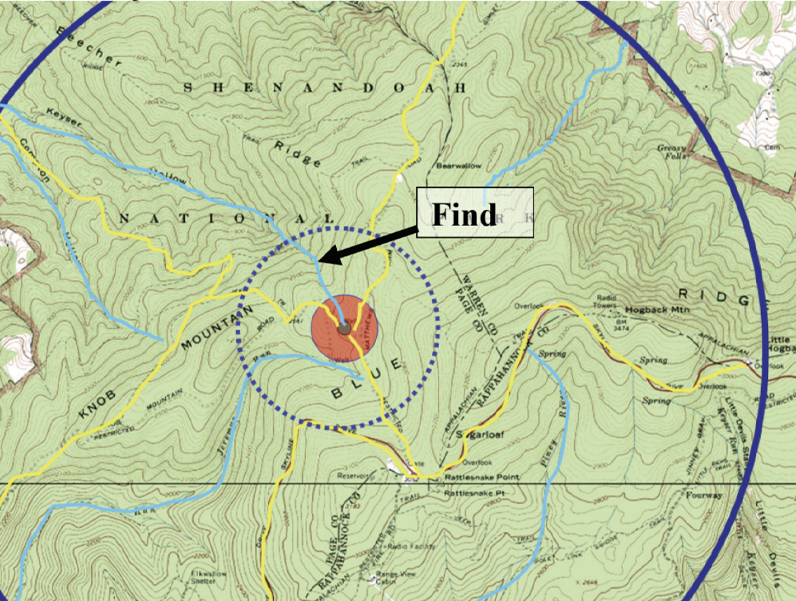
Figure 4: Simplified sophistication of Koester's Bike Wheel applied to SAR scenario (Koester 2014). Printed with permission.
Conclusion
The longitudinal analysis of Aotearoa New Zealand’s land-based search and rescue training materials spanning MLSO, ESP and MTIR reveals a clear progression towards professionalisation, accessibility and stronger alignment with the CIMS. Over 20 years, training doctrine has evolved from a single comprehensive course into 2 specialised streams of MTIR, which builds rapid competence for the first 24–36 hours and ESP, which formalises multi-period planning. This shift has improved role clarity operational tempo and inter-agency consistency.
This study showed that, across 8 analytical domains, training structure has strengthened but analytical depth has declined. In particular, the probabilistic framework linking probabilities of area, detection and success (POA×POD=POS) has largely been replaced by the SEE/LoD approach without clear validation or demonstrated equivalence to international search standards. Without a verifiable detection metric, decision-making and after-action evaluation become less transparent and harder to defend.
A similar simplification is visible in the evolution of the Bike Wheel model. The original MLSO version integrated behavioural hypotheses, search strategy development and feedback loops. MTIR maintained this reasoning, but ESP reduced it to a static reflex-tasking diagram. While accessible, this shift risks producing practitioners confident in procedure but less prepared for adaptive analytical reasoning, a pattern noted elsewhere in emergency management training literature.
Despite these concerns, several strengths remain. MTIR's emphasis on immediate action, safety and structured briefings has strengthened first-period discipline, while ESP reinforces intelligence cycles, multi-period incident action planning and structured debriefing processes that enhance interoperability. Safety and responder welfare considerations are more systematic and post-operation learning has improved. However, some doctrinal visuals still reference CIMS 2nd Edition (2014) rather than the 3rd Edition (2019), suggesting incomplete integration.
Persistent weaknesses include lack of evidence provenance, uncalibrated SEE/LoD measures and limited learning-progression pathways, producing a system that is efficient but analytically shallow. Learners gain confidence rapidly but risk the Dunning–Kruger effect. Assessments emphasise form completion over reasoning and doctrinal updates often lack citation or benchmarking.
Future reform should retain MTIR and ESP’s accessibility while restoring analytical rigour. This includes validating or reinstating the POA×POD=POS framework, restoring analytical reasoning within the Bike Wheel model and entrenching evidence attribution, worked examples and micro-credentials in probability and intelligence analysis.
Overall, Aotearoa New Zealand’s search and rescue training architecture has improved operational structure and interoperability but its analytical foundation requires reinforcement. Reconnecting evidence with decision-making would ensure that search strategies and probability adjustments remain traceable and defensible, strengthening alignment with international best practice and supporting an evidence-based volunteer search and rescue system.