

Communities are changing and innovating, and emergency management organisations need to change and innovate with them.
Conventional forms of emergency management volunteering have served the emergency services well. However, changing communities and community contexts, digital and technological innovation, and the increasing frequency and severity of climate-induced natural hazard events means it is now critical for the sector to evolve. To achieve this, organisations will need to innovate and adapt in response to their dynamic context and leverage the opportunities change offers to strengthen their workforce and ensure the sustainability of volunteering.
Compression points are emerging across the sector that include:
- increasing demands for emergency management services and competition for volunteers
- increases in other forms of volunteering
- expansion of the volunteering role
- resource and time constraints in agencies and communities
- increased professionalisation of volunteering
- the need to build resilience and ‘work with communities rather than for them’.
These factors are changing the social contract between communities and agencies as to the role they play across the PPRR spectrum. The changing psychological contract between organisations and their employees is resulting in new expectations as to how volunteers wish to work and their expectations of the organisations they choose to work for. This has resulted in a need to build new understandings and rethink formal and informal arrangements across the emergency management volunteering ecosystem.
Why national action has been elusive
‘It has just felt like Groundhog Day. We keep doing things and nothing seems to change’ (emergency management volunteering manager).
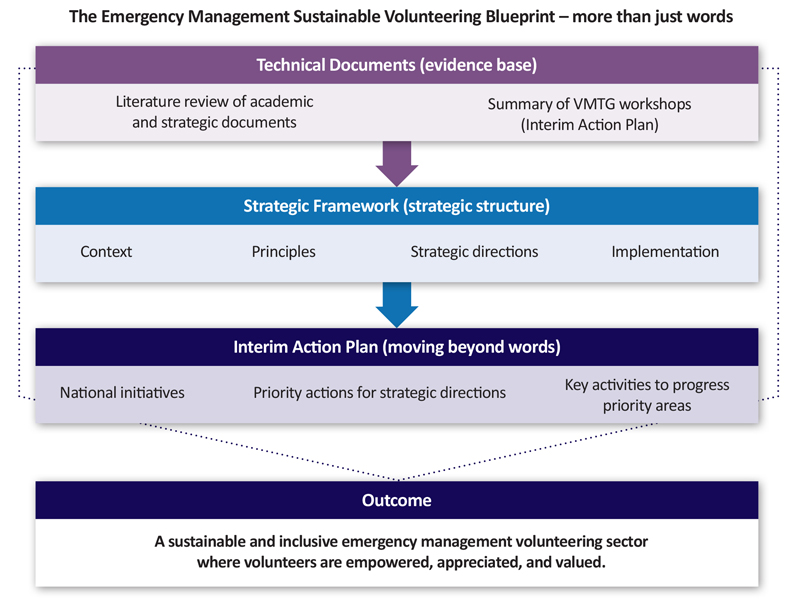
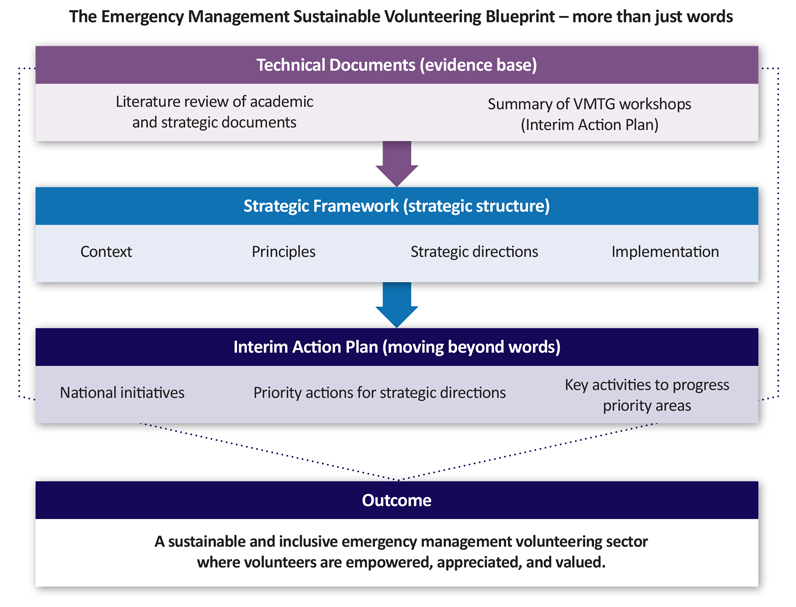
Figure 1: The Emergency Management Sustainable Volunteering Blueprint.
The emergency management sector has worked to address issues such as training, retention and recruitment. While there has been some progress in these areas, it has done little to address more entrenched issues and their root causes. One of the barriers has been the lack of enabling infrastructure to support national action. The systemic nature of solutions also presents challenges and has resulted in action paralysis due to ‘over choice’. Patchy data, the lack of a comprehensive national picture of volunteering and the lack of visibility in relation to the contributions volunteers make have compounded this.
To achieve meaningful change requires sustained investment and commitment over the longer term and broad collaboration across government, communities and agencies. Central to this is the need to enhance the volunteering experience and build inclusive relationship between communities and the emergency management sector.
Building collaborative and connected pathways towards a sustainable volunteering future
It is not that people don’t want to volunteer they just want to do it differently.
The Volunteering Blueprint has been a 2-year project that was initiated by the AFAC Volunteering Management Technical Group. This project was undertaken by Victoria University and funded by Natural Hazards Research Australia. It has been developed collaboratively with the group, community members and representatives from the volunteering sector. Its aim was to provide an evidence-based structure that would move the volunteering agenda ‘Beyond words’.
We used a systemic approach that consolidated current research and industry knowledge and mapped the volunteering ecosystem and strategic landscape of the sector.
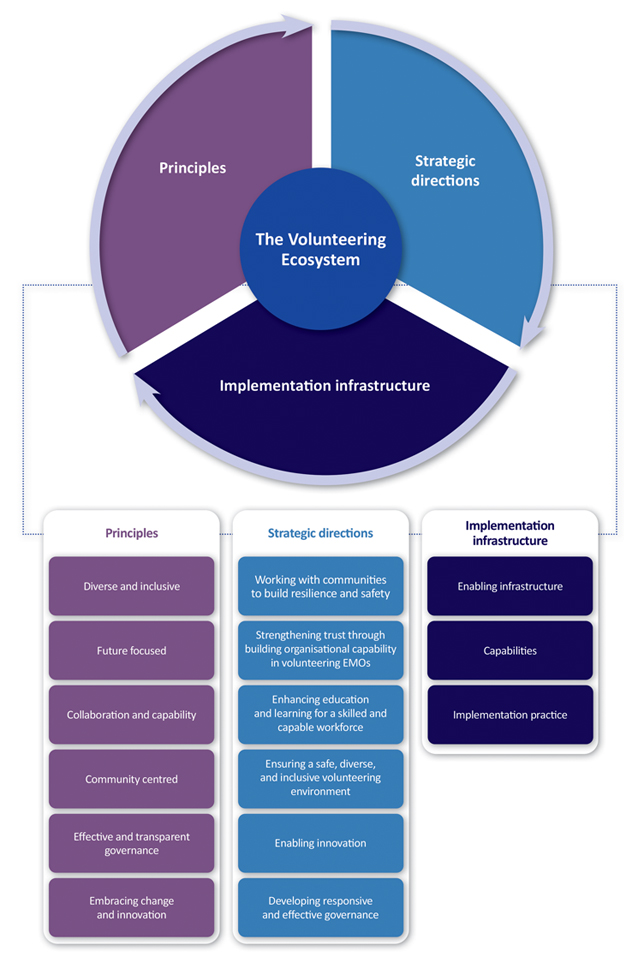
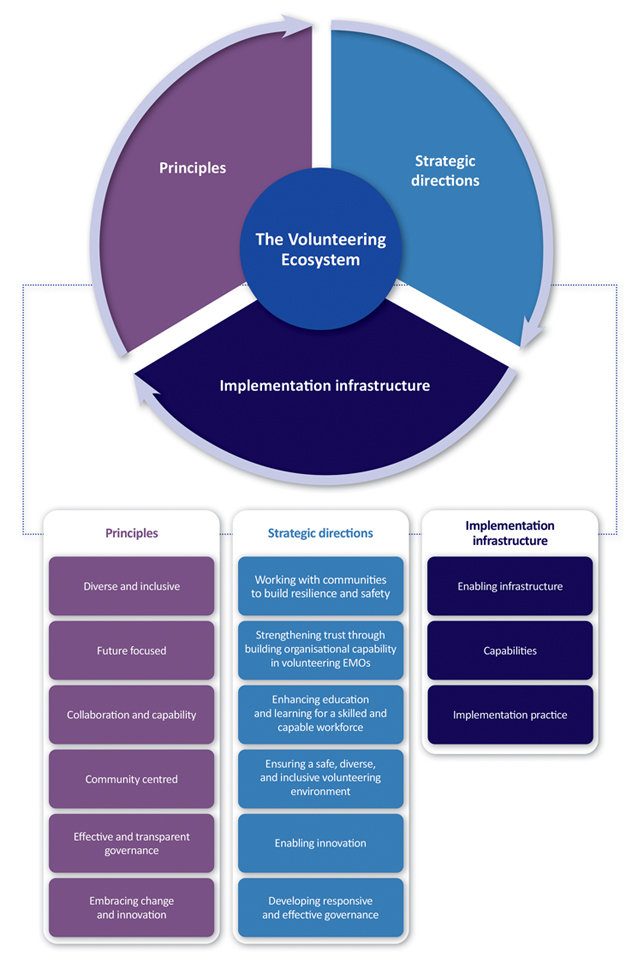
Figure 2: The Emergency Management Sustainable Volunteering Blueprint: Strategic Framework.
The Blueprint (Figure 1) provides a foundation to support a coordinated approach to sectoral action. It aligns and connects organisational and national strategic directions and initiatives through live documents that can be adapted to incorporate changes as they occur while maintaining focus.
Figure 2 shows the Blueprint strategic framework and provides:
- principles that outline the basis for an inclusive, respectful and ethical processes
- strategic directions that align with AFAC, organisational and Volunteering Australia strategies to enable tracking of progress over time and provide focus
- high-level guidance for practitioners including a maturity matrix to evaluate strategic directions
innovation case studies.
The Emergency Management Sustainable Volunteering Blueprint: Interim Action Plan provides:
- a structure to show where initiatives are occurring so they can be coordinated across the sector
- a pathway to enhance the volunteering experience and build volunteering capability within emergency management organisations through innovation, education and learning.
The Emergency Management Sustainable Volunteering Blueprint: Support for practitioners provides:
- practical exercises and guidance to support connection to front line activities and program development with key components of the strategic framework
- guidance in relation to the use of tools such as the Strategic Blueprint Ecosystem and Maturity Matrix
- useful resources.
The Volunteering Management Technical Group have endorsed the strategic framework and took ownership of the Interim Action Plan. This research has contributed to the development of the National Emergency Volunteering Strategy being led by the New South Wales Department of Premier and Cabinet.