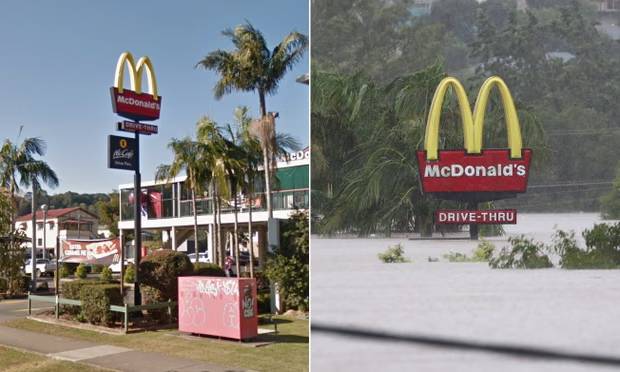
Floods are managed by state and territory governments, through specialist agencies such as the State Emergency Service.
Reducing the risk of floods is managed by a combination of landuse planning, building standards, flood mitigation strategies, community resilience building and household preparedness.
The Bureau of Meteorology assess potential flood risk to prepare communities for flooding. This includes forecasting rainfall, collecting data about rainfall, river height and soil moisture, and modelling flood scenarios. The Bureau of Meteorology also provides data on current rainfall and river conditions.
Water management authorities work with local councils/governments to assess and model flood risk in different areas for planning purposes. Landuse planning includes development controls for building located within high-risk flooding areas. Flood mitigation may include a range of hard infrastructure such as levees, flood retaining basins, or they may include nature based solutions.
Further guidance on how to manage flood risk can be found in the AIDR Handbook Managing the Floodplain Handbook
Further information on nature based solutions can be found at NRM Regions Australia and Designing a flood resilient home and garden | ABC Emergency
How does climate change affecting flooding?
In the south-west of Australia there has been a decrease of around 16% in April to October rainfall since 1970. Across the same region, May to July rainfall has seen the largest reduction, by around 20% since 1970. In the south-east of Australia, there has been a decrease of around 9% in April to October rainfall since 1994. However heavy short-term rainfall events are becoming more intense.
The National Climate Risk Assessment projects that there may less frequent riverine flood events due to a reduction in overall runoff. However, when floods do occur, they are likely to be higher due to higher event rainfall totals. Southern and particularly south-western Australia are projected to experience reduced runoff. In contrast, parts of the east coast and tropics are likely to see an increase in heavy runoff events, which could lead to higher risks of flooding.