

Networks Survey Report 2026
It presents the following:
- The scope in which DRR networks operate in (international, national, state/territory, regional, local)
- The identified network sectors in the Australian DRR space
- The identified gaps or unmet needs across existing groups/networks in DRR
Distribution of networks operating scope
The survey findings indicate that the identified networks tend to primarily operate at a local level, followed by national, state/territory, regional, and international (see Figure 1). These findings likely reflect where respondents most often engage with collaboration in practice – particularly at the community and regional scale. This suggests that collaboration is strongly place based, while also supported by broader state, national, and international connections.
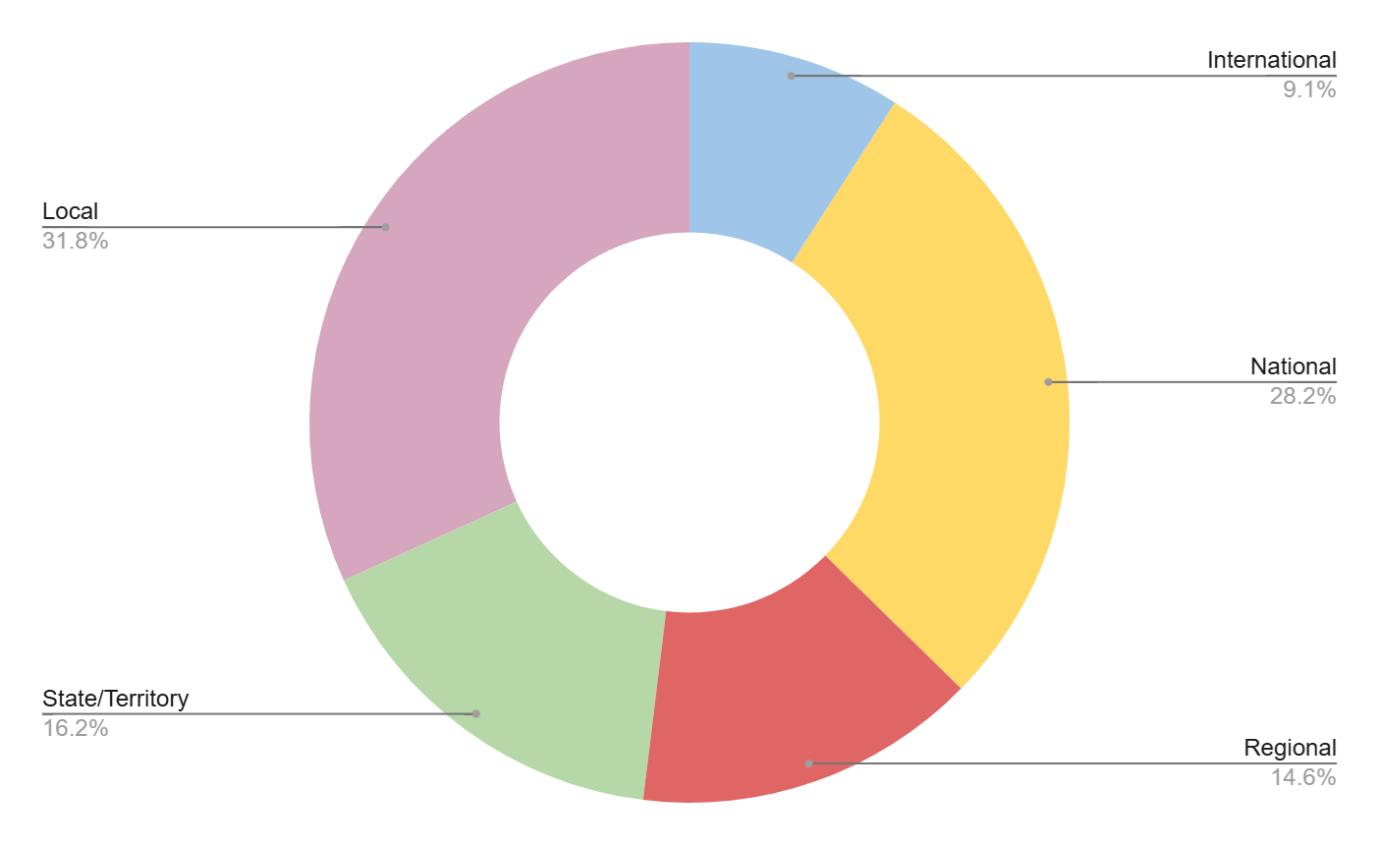
Figure 1. Survey results showing the prominence of governance levels (local, regional, state/territory, national, and international) within networks.
Network sectors
Each network sector was ranked and classified in order of frequency, from most to least mentioned (see Figure 2). The distribution of responses reflects the professional backgrounds and networks of survey participants rather than the full landscape of DRR networks in Australia. Mentions were concentrated around ‘Emergency management’, ‘Social services’, and ‘Community resilience and recovery’. This suggests differences in visibility and connectivity rather than relative importance, and points to potential opportunities to strengthen cross‑sector awareness and collaboration. The findings should be interpreted as an indication of network familiarity rather than a comprehensive picture of DRR networks across Australia.
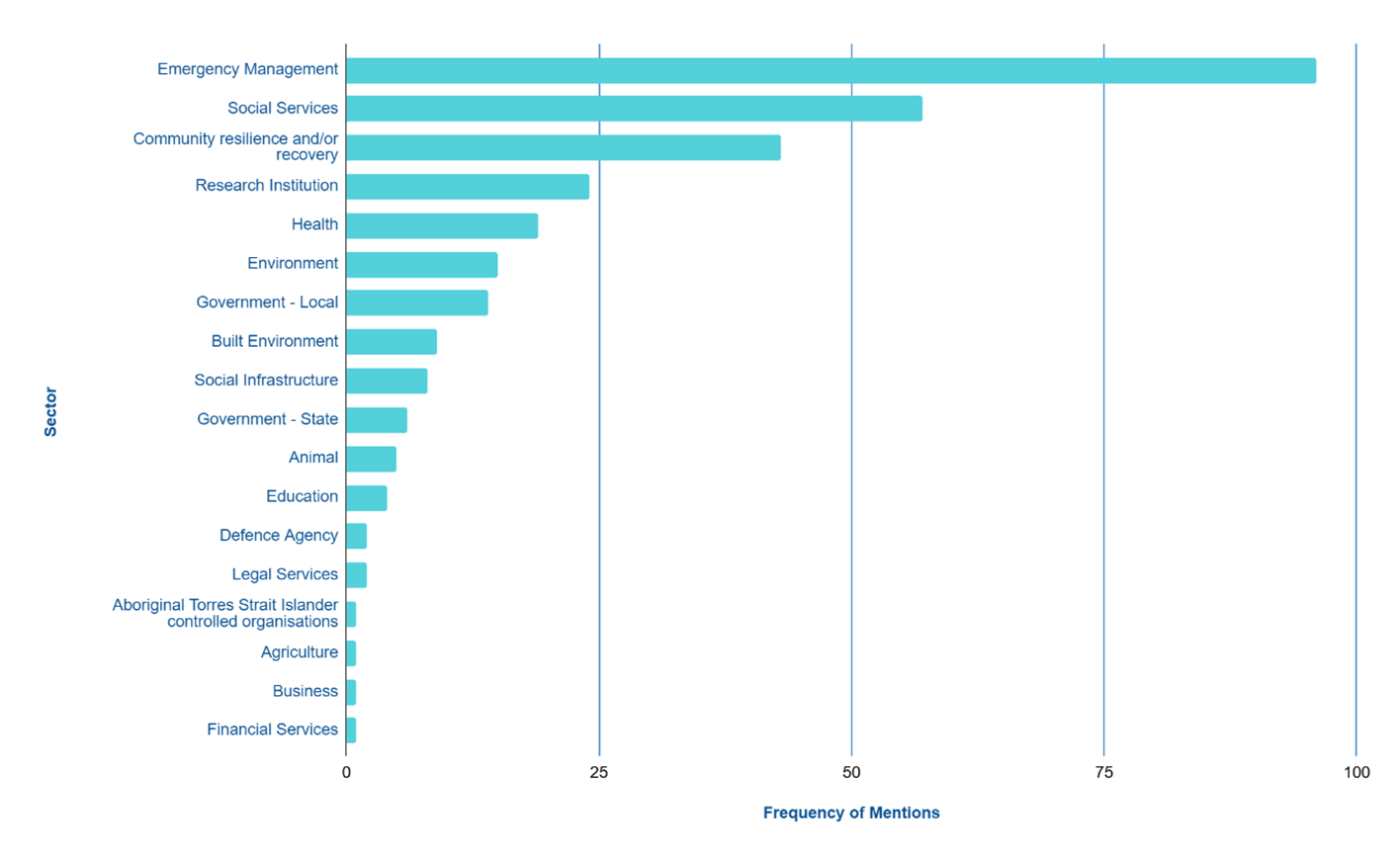
Figure 2. Survey-identified network sectors and frequency of mentions.
Gaps or unmet needs across existing networks
Responses from the survey highlighted a range of gaps and unmet needs that participants have noticed across existing networks (see Table 1). While the reported gaps are based on individual roles and contexts, they highlight common challenges affecting how well networks support practitioners and researchers in the Australian DRR context.
Please contact the AIDR team at enquiries@aidr.org.au if you would like to know more about the listed networks.
Table 1: Survey thematic analysis
|
Themes |
Examples of gaps and unmet needs |
|
Funding and sustainability |
|
|
Collaboration, coordination and fragmentation |
|
|
Communication and information access |
|
|
Inclusion and equity gaps |
|
|
Capacity, leadership and facilitation |
|
|
Geography and access |
|
Table 2: List of mentioned networks*
|
Networks |
Frequency |
|
A3HN – Health, Housing and Homelessness Network |
1 |
|
ACOSSS – Australian Council of Social Services |
1 |
|
ADN – Avoidable Deaths Network |
1 |
|
AFAC – Australian and New Zealand National Council for Fire and Emergency Services |
5 |
|
Agricultural Innovation Fund |
1 |
|
AIDR – Australian Institute for Disaster Resilience |
7 |
|
AIES – Australian Institute of Emergency Services |
5 |
|
Allied Health Professionals |
1 |
|
Anglicare Disaster Recovery Volunteers |
2 |
|
Animal Emergency and Incident Management Network ANZ |
1 |
|
Animal Plan Hunter |
1 |
|
ARC – Australian Red Cross |
4 |
|
ASIAL – Australian Security Industry Association |
1 |
|
AusEE – Australian Association for Environmental Education |
1 |
|
Australian Conservation Forum |
1 |
|
Australian Rural Leadership Foundation |
1 |
|
Australian Universities |
8 |
|
AWE – Australasian Women in Emergencies Network |
5 |
|
Bushcare |
1 |
|
CALD Networks |
3 |
|
CGEIG – Combined Gippsland Essential Infrastructure Group |
1 |
|
Charitable, Not-for-Profit, Philanthropic Roundtable |
1 |
|
CIB – International Council for Research and Innovation in Building and Construction |
1 |
|
Climate Change Exchange |
3 |
|
CNSA – Cancer Nurses Society of Australia |
1 |
|
Colectivo Ecuador con gestión de riesgos. |
1 |
|
Commonwealth Disabled People’s Forum |
1 |
|
Community-Based Networks |
8 |
|
Connecting Communities Australia |
1 |
|
Coo-Wee Ride Inc. |
1 |
|
COPRRRA – Community of Practice on Relocation, Retreat and Resilience in Australia |
2 |
|
Councils/LGAs |
11 |
|
CRCs of East Gippsland |
1 |
|
CRO Network – Contract Research Organization Network |
1 |
|
CSU – Charles Sturt University |
1 |
|
DFES – Department of Fire and Emergency Services |
2 |
|
DFFC – Department of Families, Fairness and Housing |
1 |
|
Disability Networks |
7 |
|
Disaster Legal Help Community of Practice (Victoria) |
1 |
|
Disaster Recovery Mentors |
1 |
|
DisasterWISE |
3 |
|
DPIRD – Department of Primary Industries and Regional Development |
1 |
|
DRA – Disaster Relief Australia |
4 |
|
DRESG – Disaster Resilient Australia-New Zealand School Education Network |
1 |
|
Emergency Services Foundation Learning Network |
1 |
|
ENoLL Climate Living Lab cluster |
1 |
|
FCA – Financial Counselling Australia (Disaster Community of Practice) |
1 |
|
Fire and Rescue NSW |
2 |
|
First 72 Hours |
1 |
|
First Nation Community Groups |
1 |
|
FPAA – Fire Protection Association Australia |
3 |
|
FRRR – Foundation for Rural and Regional Renewal |
1 |
|
Gender and Disaster Australia |
2 |
|
Get Ready Animals |
1 |
|
Global Fund for Community Foundations |
1 |
|
GMHA – Greater Melbourne Heat Alliance |
1 |
|
Gold Coast Healthcare Network |
1 |
|
Gold Coast Seniors Round Table |
1 |
|
HopeCare |
1 |
|
Human and Social Recovery Group |
1 |
|
IAEM – International Association of Emergency Managers |
4 |
|
IAP2 – International Association for Public Participation |
1 |
|
ICC – Integrated Care and Commissioning |
1 |
|
IERM – Institute of Environment and Recreation Management (South Africa) |
1 |
|
Impacted Communities |
1 |
|
Inclusive Sport Network |
1 |
|
Institute of Natural Hazards Research |
1 |
|
IRDR – Integrated Research on Disaster Risk |
1 |
|
ISRM – Institute of Strategic Risk Management |
1 |
|
Jesuit Social Services' Centre for Just Places |
1 |
|
LCSA – Local Community Services Association (NSW) |
1 |
|
LDCC – Local Disaster Coordination Centre (or Control) in Australia (Queensland) |
1 |
|
LDMG – Local Disaster Management Groups (Queensland) |
1 |
|
LEAP – Local Emergency Action Plan |
1 |
|
LEMC – Local Emergency Management Committee |
1 |
|
LinkedIn Emergency Management |
2 |
|
LMR – Low and Mid-Rise Housing Policy (NSW) |
2 |
|
Local Climate/Environment Network |
4 |
|
Local Community Hubs (CHUBS) / Neighbourhood Centres |
7 |
|
Local Community Resilience Network |
9 |
|
Local Disability Networks |
12 |
|
Local Emergency Management / Relief Groups |
7 |
|
Local Family / Seniors Social Support Network |
4 |
|
Local Health Network |
1 |
|
Local Multicultural Networks |
2 |
|
Local Residents Action Groups |
1 |
|
Local Women Support Network |
1 |
|
MEMEG – Municipal Emergency Management Enhancement Group |
3 |
|
MEMPC – Municipal Emergency Management Planning Committee |
7 |
|
Mental Health First Aid Australia |
1 |
|
Municipal Recovery Managers Collaboration |
1 |
|
NDRI – National Disaster Research Institution |
1 |
|
NEAR – Network for Empowered Aid Response |
1 |
|
Neighbourhood Collective Australia |
1 |
|
NEREIDS – Network for early career researchers on interdisciplinary disaster studies (UK) |
1 |
|
NHRA – National Health Reform Agreement |
1 |
|
NICDAC – National Infant and Child Disaster Mental Health Advisory Committee |
1 |
|
NIDR – National Indigenous Disaster Resilience |
1 |
|
Northern (Tasmania) Disability Service Provider Disaster and Emergency Planning and Response Group |
1 |
|
Northern Drought Hub |
1 |
|
Northern Rivers Community Resilience Alliance |
3 |
|
Northern Rivers Wildlife Network Emergency Management |
1 |
|
Northwest Public Health Emergency and Response |
1 |
|
NRM (National Resource Management) regions Australia Nature Based Solutions |
1 |
|
NSW Disaster Legal Assistance Group |
1 |
|
NSW Reconstruction Authority (NSW RA) |
1 |
|
NSW RFS – New South Wales Rural Fire Service |
3 |
|
Our Community Our Voice by Gender Equity West |
1 |
|
PaIRE – People at Increased Risk in Emergencies |
1 |
|
Parents for Climate |
1 |
|
ParraCAN – Parramatta Climate Action Network |
1 |
|
PCEP – Person-Centred Emergency Preparedness |
10 |
|
Plan C – Community Carers and Responders Network |
1 |
|
PWD – People with Disability Emergency Preparedness (Tasmania) |
1 |
|
QFRS – Queensland Fire and Rescue Service |
1 |
|
Qld Futures- Queensland Futures Institute |
1 |
|
QPS – Queensland Police Service |
2 |
|
Queensland Disaster Management Research CoP |
1 |
|
Queensland Fire and Biodiversity Consortium |
1 |
|
Queensland Government |
2 |
|
QRA – Queensland Reconstruction Authority |
1 |
|
RCA Crisis Management |
1 |
|
Recovery on Wheels Western Sydney |
1 |
|
ReGen Melbourne |
3 |
|
REMPC – Regional Emergency Management Planning Committee |
3 |
|
Resilient Building Council |
1 |
|
RRANZ – Response and Recovery Aotearoa New Zealand |
1 |
|
SES – State Emergency Service |
9 |
|
Shahid Beheshti University (SBU) (Iran) |
1 |
|
Shelter and Settlements CoP (international) |
1 |
|
South Coast Health and Sustainability Alliance |
1 |
|
SPHERE – Sydney Partnership for Health, Education, Research and Enterprise |
1 |
|
St John Ambulance |
1 |
|
Standards Australia |
1 |
|
Strengthening Local Government Partnerships (Victoria) |
2 |
|
Sweltering Cities |
2 |
|
Sydney Ambassadors |
1 |
|
Tasmanian Fire Service |
1 |
|
Technology of Participation, Washington County Public Health internal CoP |
1 |
|
The Greater Melbourne Heat Alliance |
1 |
|
The Partnership for Inclusive Disaster Strategies (United States) |
1 |
|
Thriving Kids in Disasters Alliance (now Queensland Kids Partnership) |
2 |
|
TISN – Trusted Information Sharing Network |
1 |
|
UNAA – United Nations Association of Australia |
1 |
|
United Kingdom Alliance for Disaster Research |
1 |
|
VCOSS – Victorian Council of Social Service |
6 |
|
VCRC – Victorian Climate Resilient Councils |
1 |
|
Victorian Disaster Researchers Network |
1 |
|
WADEM – World Association for Disaster Emergency Medicine |
2 |
|
WELA – Women's Environmental Leadership Australia |
1 |
|
Western Sydney Health Alliance – Councils, LHDs and PHNs |
1 |
|
World Federation of the Deaf – Expert Group DRR |
1 |
|
World Health Organization Health Emergency and Disaster Risk Management Research Network |
1 |
|
Yalu Aboriginal Corporation |
1 |
* A small number of responses were excluded from the list due to ambiguity or confidentiality
Compiled by Ben Johnson Yantoro