

Pregnancy and new motherhood are common experiences of women. Ensuring that the needs of women are properly included in disaster planning requires these circumstances to be considered and addressed. This review explored the experiences of pregnant women and new mothers during emergencies in Australia. Experiences of pregnant women identified related to bushfire smoke exposure, restricted access to health care, physical impediments of pregnancy, maternal nutrition detriments, mental health effects and support, post immediate disaster effects and research gaps. Experiences of new motherhood or infant care identified included being the primary and often sole caregiver, emergency preparedness and evacuation challenges, the continuing care needs of infants, bushfire smoke exposure, physical impediments of caring for an infant and health care access issues. Domestic violence and socio-economic and other disadvantages were cross-cutting issues for pregnant women and new mothers as were their roles as emergency responders and essential workers. Motherhood should be recognised as an inter-sectional status requiring specific consideration and support during disasters. Further research as well as specific planning and resource development should be undertaken to take account of the particular needs of women.
Introduction
The Sendai Framework for Disaster Risk Reduction 2015-2030 (UNDRR 2015) recognises the importance of including the experiences and perspectives of women in disaster planning, response and recovery in order to reduce individual, community and national disaster vulnerability. Although, it is often said that women are disproportionately affected in disasters, the extent to which this is the case depends on the specific country context, disaster type and outcome measure (Cutter 2017). As described by Chowdhury et al. (2022), women’s social, economic and cultural context also influence their vulnerability. Therefore, understanding how individual circumstances shape women’s experience of disasters is vital.
Much of the attention to women in disasters has been on the influence of social expectations of women and men and women’s experiences of sexism and domestic violence (Enarson 2012; Parkinson and Zara 2013; Chowdhury et al. 2022). Despite pregnancy and new motherhood being significant life processes for many women, the effect of women’s reproductive work, including pregnancy, breastfeeding and the care of infants on their experiences and needs during disasters have been largely overlooked. Ensuring that women are properly included in emergency and disaster planning requires that pregnancy and new motherhood experiences are considered.
Australia’s National Disaster Risk Reduction Framework (Commonwealth of Australia 2018) states that, ‘greater policy-research connection and innovation is needed to ensure necessary evidence bases are available to inform efforts to identify, prioritise and reduce disaster risks’ (p.13). As an evidence-base starting point, this narrative review focuses on the natural disaster experiences of pregnant women and new mothers in Australia. The aims are to collate and synthesise existing knowledge to identify knowledge and support gaps for pregnant women and new mothers that will inform future research and improve planning and response.
Methods
This review took a narrative approach, which is a scholarly summary of a body of evidence on a specific subject and may include peer-reviewed academic literature as well as other evidence sources (Greenhalgh et al. 2018). In a narrative review, evidence is selected ‘judiciously and purposefully with an eye to what is relevant’ (Greenhalgh et al. 2018). This review followed an established review process including the steps of 1) specifying the review question, 2) developing a search strategy, 3) selecting sources of evidence and 4) synthesising the evidence (Mays et al. 2005).
The review question was: ‘What are the natural disaster experiences and support needs of pregnant women and mothers of infants (0-11 completed months) in Australia?’.
Searches of PubMed® were undertaken between 5 and 6 October 2024 using the keywords: ‘Australia’, ‘pregnancy’, ‘pregnant’, ‘infant’, ‘baby’, ‘babies’, ‘child’, ‘children’, ‘breastfeeding’, ‘disasters’, ‘emergencies’, ‘flood’, ‘cyclone’, ‘bushfire’, ‘storm’ and ‘heat wave’. Documents identified in this search were eligible for inclusion if they were published from 2014 onwards and addressed the experiences or needs of pregnant women or mothers of children 0–11 months old during a disaster event in Australia. The year 2014 was chosen as the baseline for inclusion to support the currency of findings. Given the focus on pregnancy and care of infants, papers involving women who experienced a disaster during pregnancy but only considered the impact on the development of their children beyond infancy were excluded.
The titles and abstracts of publications captured in Pubmed® searches were read and screened for inclusion. Publications that did not meet the inclusion criteria (e.g. they were in relation to a non-Australian disaster event) were excluded. The remaining publications were read in full and retained for analysis if they contained content on the experiences or needs of pregnant women and mothers of infants during a disaster in Australia. Publications were analysed using simple conventional content analysis (Hsieh and Shannon 2005). This followed a process by which each publication was read and re-read by the author to identify themes and sub-themes.
Following this analysis, the grey literature was searched via Google® with the purpose of identifying documents containing content adding to the understanding of or illustrating the themes and sub-themes identified in the academic literature. Additional grey literature documents were identified within the academic literature and grey literature. Submissions made to the 2020 Royal Commission into Natural Disaster Arrangements were searched using the search terms ‘pregnant’, ‘pregnancy’, ‘baby’, ‘babies’, ‘infant’ and ‘child’. Submissions made by pregnant women or mothers of children 0–11 months old or from others addressing the experiences or needs of such individuals were included.
Older publications referred to in the selected academic or grey literature were included on an exceptional basis if they were deemed to add important information related to an identified theme or sub-theme. For example, difficulty with formula feeding was an identified sub-theme but there was a lack of data on the effects on child health. However, an included document cited a 2012 conference abstract that reported an association between a lack of resources for food preparation and infant hospitalisation after the 2011 Brisbane floods and Cyclone Yasi. This abstract was obtained and included given the seriousness of the finding and the lack of any other document addressing this issue.
Results and discussion
Searches of PubMed® yielded 407 documents of which 90 were identified for full text review after reading the abstracts and 28 were included in the review after reading the full text. A 2013 academic paper and a 2012 conference abstract published in a peer-reviewed journal that were cited in included documents and identified during the analysis process as of particular importance were also included. In addition, a paper that was ‘in press’ at the time of the analysis and met the inclusion criteria was included in the review.
Searches of Google® and reading of included academic and grey literature identified 25 relevant documents from the grey literature (excluding royal commission submissions). These were mostly policy documents (5), reports from government inquiries (4), program reports from organisations (4) and news reports (4) but also included conference posters (2), fact sheets (2), a submission to a government inquiry from a medical organisation, a media release from a university, a handbook for evacuation planning as well as an academic book that was not found in the PubMed® search. One 2011 news report that was referred to in an included document and identified as of particular importance was also included. Ninety-seven submissions to the royal commission mentioned emergency experiences or response to children (of any or unspecified age) or pregnant women and were included in the review. Research not specific to disasters in Australia but that explained findings (e.g. why pregnant women may find it particularly difficult to breathe when the air is smokey) were considered appropriate.
Women’s experience of pregnancy during a disaster
Twenty-three academic publications focused on pregnancy and birth experiences or outcomes and 4 focused on motherhood but also included non-trivial content on pregnancy experiences or outcomes. These publications included cohort studies, studies that recruited pregnant women and collected quantitative and/or qualitative data and reviews. The 8 cohort studies considered pregnancy outcomes for women who had experienced bushfire, flood, cyclones or heat and involved data from thousands to hundreds of thousands of women (Jegasothy et al. 2022; Nyadanu et al. 2024; Parayiwa et al. 2022; Yang et al. 2024; Brew et al. 2022; Parayiwa et al. 2023; O’Donnell and Behie 2013; Zhang et al. 2023).
Fourteen papers reporting on recruitment studies involved tens to hundreds of women and explored aspects of women’s experiences as well as physical and mental health effects of disasters (Chen et al. 2020; Cherbuin et al. 2024; Davis et al. 2024; Kildea et al. 2018; Simcock et al. 2018; Davis et al. 2023; Dancause et al. 2017; McLean et al. 2021; Paquin et al. 2021; Beyene et al. 2022; Hamrosi and Gribble 2025; Roberts et al. 2023; Gribble et al. 2023a; Gribble et al. 2024). This research was in relation to just 2 events (2011 Brisbane floods and 2019–20 bushfires), 6 of these papers were from the same study on 2011 Brisbane flood experiences and 2 studies contributed 2 and 3 papers each to this dataset. Another paper considered views towards pregnant women’s involvement as disaster responders (Smith et al. 2018). There were also 4 review papers that considered various health aspects of disasters on women and infants (Murphy et al. 2021; Evans et al. 2022; Kumar et al. 2021; Foo et al. 2024).
This research indicates that being pregnant when exposed to emergency and disaster conditions can have a profound effect on women and their fetuses/infants. Themes identified were related to bushfire smoke exposure, restricted access to health care, physical impediments of pregnancy, maternal nutrition detriments, mental health effects and support as well as post-immediate disaster effects. Research gaps were also identified.
Bushfire smoke exposure
Conditions, such as bushfire smoke, have a disproportionately negative effect on pregnant women. Pregnancy is physically demanding. Pregnant women experience a 15% increase in their metabolic rate, an overall 20% increase in oxygen consumption, a 40% increase in the volume of air they inhale and exhale in one minute and a 40% increase in their cardiac output as compared to non-pregnant women (Soma-Pillay et al. 2016). These changes make pregnant women more vulnerable to respiratory stressors, including air pollutants. However, 70% of healthy pregnant women report feeling breathless while undertaking their normal daily activities even in the absence of pollution (LoMauro and Aliverti 2015).
It is unsurprising that women who experienced the 2019–20 bushfires reported that smoke made it hard to breathe and that it was difficult for them to wear a mask to protect themselves and their fetus (if they were able to obtain one) (Gribble et al. 2023a). Women described having to choose between undertaking prescribed activities, such as walking to assist in managing gestational diabetes, and being exposed to smoke (Roberts et al. 2023). Some pregnant women acted to reduce the effects of the smoke by purchasing an air filter or leaving the disaster-affected area. However, these options were not available to everyone (Davis et al. 2024; Roberts et al. 2023). Pregnant women often had the care of young children (Gribble et al. 2023a) and needed to balance risk of exposure to smoke for themselves and their children against the requirement of young children to be physically active and/or cope with keeping toddlers occupied and happy within a confined space (Roberts et al. 2023; Rodney et al. 2023). Some women found themselves facing the strenuous activity of giving birth within a smokey hospital environment (Roberts et al. 2023; Davis et al. 2023).
Within the literature, concern regarding the effects of smoke on the fetus was noted as a pervasive source of stress and distress for pregnant women effected by bushfire (Davis et al. 2024; Gribble et al. 2023a). Not being able to access information about what the possible consequences are and how to manage the situation adds to their distress (Rodney et al. 2023; Roberts et al. 2023). A dearth of research hampers health professionals, such as midwives, from providing detailed advice (Williamson et al. 2023). In a submission to a New South Wales parliamentary inquiry, the Royal Australian and New Zealand College of Obstetricians and Gynaecologists noted that specific information for pregnant women over the 2019–20 bushfire season was limited (Royal Australian and New Zealand College of Obstetricians and Gynaecologists 2020). However, the College warned against being too alarmist noting that the risks of bushfire smoke are possibly less than smoking during pregnancy (Royal Australian and New Zealand College of Obstetricians and Gynaecologists 2020). Nonetheless, researchers described women who experienced bushfire smoke while pregnant as ‘berating’ themselves and ‘apologis[ing] to their foetuses for being unable to breathe in a way that protects them from possible harm’ (Roberts et al. 2023, p.183).
Restricted access to health care
The effect of disasters on access to health care is described within the literature as of particular concern to pregnant women as their expected due date approaches. Babies wait for no one and women give birth whenever it is time, including in evacuation centres (Rourke 2011; Feng 2019). The risk of preterm birth is elevated during and in the immediate aftermath of emergencies such as cyclones and heat waves, although the mechanism for this is unclear (Sun et al. 2020; Jegasothy et al. 2022). For example, during Cyclone Yasi in North Queensland in 2011, 3 women were reported in the media as having given birth in evacuation centres (Rourke 2011). Also, as Cyclone Veronica approached Western Australia’s Pilbara Coast in 2019, 5 women gave birth within a 24-hour period at one small health service. This was noted as a highly unusual occurrence (Feng 2019).
During the 2019–20 bushfires, general practitioners reported distressed and heavily pregnant women presenting at an evacuation centre needing psychological support and of arranging to get them closer to the hospital when the road conditions allowed (Hamrosi and Gribble 2025). Pregnant women approaching their due date may evacuate distant from the affected area until they birth or the threat has passed in order to ensure continuity of health care. This was described by a woman quoted in the report of the 2020 Royal Commission:
Although there is a hospital less than 2kms from my house, there is no obstetric [doctor]. We would have been safe sheltering in our home but due to being 9 months pregnant I could not risk being cut off from the hospital 60kms away. As a result, my husband, 3 year old daughter, cat and dog had to evacuate for almost 2 weeks, and I gave birth to my son during our [e]vacuation.
Commonwealth of Australia (2020 p.278)
The Western Australian Government recommends pregnant women plan for cyclone season and advises that, ‘Pregnant women should discuss cyclone events as part of their birth plans and preparations’ (Department of Health [no pagination]). However, no specific guidance was identified on how to do this.
Physical impediments of pregnancy
Being pregnant can reduce the ability of women to escape disaster. This is especially the case in advanced pregnancy when the size and weight of a pregnant belly make movement more difficult. In 2023, a 9-months pregnant woman who was trapped by floodwater in Cairns with her 2-year-old toddler was advised by a triple zero (000) call operator to climb on the roof of her house, something she was unable to do (she was thankfully rescued by surf lifesavers) (Duffy 2023). Heavily pregnant women may be unable to drive because the size of their pregnant belly means they cannot reach vehicle driving controls (Gribble et al. 2023a). Women may also face difficulties escaping due to pelvic girdle pain that is common in pregnancy (incidence up to 84%) and can make it difficult to stand, walk or run (Walters et al. 2018). During the 2019–20 bushfires, pregnant women reported facing difficulties related to standing for long periods of time, not having a chair to sit on, not having a toilet nearby and not having an appropriate place to sleep (Gribble et al. 2023a). Queuing to access resources was also a difficult task for pregnant women (Gribble et al. 2023a).
Maternal nutrition detriments
Pregnant women who experienced the 2019–20 bushfires and who also had young children described prioritising their children’s needs over their own, including food and drink (Gribble et al. 2023a). Some of these women fainted while queuing for supplies during and immediately after the bushfires, possibly connected to dehydration or because they had not eaten (Gribble et al. 2023a). Research considering the effect of the 2011 Brisbane floods identified a decline in the quality of pregnant women’s dietary content and that one-quarter of study participants skipped meals (Dancause et al. 2017). Those women who were most adversely affected by the emergency were also most likely to have experienced a negative influence on their diet. Restricted maternal and infant access to food was noted as being of concern after the 2022 flooding of northern New South Wales and southern Queensland (O’Dell et al. 2023).
Mental health effects and support
Women can experience poor mental health during pregnancy and afterwards in non-emergency circumstances (Woody et al. 2017; Cherbuin et al. 2024) and disasters increase this risk. Research on the experiences of women who were immediately preconception (<3 months), pregnant or postpartum at the time of the 2019–20 bushfires found that women who had high bushfire exposure had a greater than fourfold risk of having moderate to severe depression in the 7 to 11 months after the bushfires than did women who had minimal bushfire exposure (Cherbuin et al. 2024).
Health care provision during and after pregnancy can make a difference to women’s wellbeing. Research following the 2011 Brisbane floods found women who received continuity of midwifery care (care by a small group of known midwives) did not have elevated rates of postnatal depression with increased hardship or stress caused by the disaster (Kildea et al. 2018). This was in contrast to women who received standard hospital care. Analysis controlling for relevant variables suggested that it was the model of care that made a difference to maternal mental health. Notably, women who had continuity of midwifery care had more postnatal visits than those with standard care (average of 6 versus 2), which may have contributed to their protected mental health (Kildea et al. 2018).
The different coping strategies that pregnant women use after experiencing a disaster was found to affect their level of distress (Chen et al. 2020). This suggests that psychological support post-disaster may ameliorate mental health decline. Other pregnant women and new mothers are notable as important sources of emotional support for women during and after disasters (Davis et al. 2024; Gribble et al. 2023a).
Post-immediate disaster effects
The effect of disasters on the health of pregnant women and their foetuses is not limited to the immediate disaster period. Disaster exposure (including during early pregnancy) may influence foetal growth and birth timing. Pregnant women living in areas affected by the 2009 Black Saturday bushfires were 50% more likely to give birth to extremely premature babies (20 to 27 weeks, which carries certain or very high risk of newborn death) than women who gave birth in the same location in years prior or outside of bushfire-affected areas at the same time as the fires (O’Donnell and Behie 2013).
Experience of cyclone early in pregnancy in Queensland was found to increase the risk of preterm birth (Parayiwa et al. 2022). Analysis of nearly 30 years of birth data from Sydney and Brisbane identified that experiencing a severe flood during early pregnancy was associated with low birthweights and stillbirths (Yang et al. 2024). Other research found that bushfire smoke exposure is also associated with adverse birth outcomes including premature birth and stillbirth (Nyadanu et al. 2024).
Research gaps
Other health effects of disasters on pregnant women have not been researched in Australia even though it is likely that effects exist. For example, given that pregnant women are more vulnerable to infections (Sordillo and Polsky 2010), it is probable that pathogens that may be present after flooding when sewage contaminates water and surfaces present a particular risk. However, research is lacking and much of the research on disasters and pregnancy focuses on the developmental and health effects on the fetus and then child rather than on the woman (e.g. Murphy et al. 2021; McLean et al. 2020; Simcock et al. 2018; Zhang et al. 2023).
Women’s experiences as new mothers
Nine academic publications focused on new motherhood or infant care in disasters in Australia. These include an audit of disaster plans (Gribble et al. 2019) and an analysis of oral histories about Australian disasters over 50 years (Pascoe et al. 2023). It also included 6 papers reporting on recruitment studies, one of which tested breastmilk of smoke-exposed women while the remainder collected data on disaster experiences via survey or interview of parents, emergency responders or health providers (Beyene et al. 2023; Hamrosi and Gribble 2025; Hine et al. 2023; Gribble et al. 2023a; Gribble et al. 2024; Roberts et al. 2023; Newby et al. 2012). Four of the papers reporting on recruitment research considered 2019–20 bushfire experiences and 3 of these papers were from a single study that involved a few hundred participants.
Themes identified were:
- mothers as primary and often sole caregivers of infants
- emergency preparedness issues
- evacuation experiences
- continuing care needs of infants
- bushfire smoke exposure
- physical impediments of caring for an infant
- health care access issues.
Mothers as primary and often sole caregivers of infants
Mothers of infants face challenges related to their care for these youngest children during and after emergencies. Infants are vulnerable due to their specialised nutritional needs, immature immune systems, are susceptibility to heat, dehydration and cold and their total dependence on others (Gribble et al. 2019). These needs contribute to the challenges and vulnerabilities experienced by their mothers who are overwhelmingly their primary caregivers. While cultural expectations and sexism are considered drivers for the disproportionate care work that women undertake (Elson 2017), the care of infants is a special case as there is a biological underpinning for maternal care (Gribble et al. 2023b). Indeed, infants and their mothers form a dyad, with a physiological link maintained via breastfeeding (Gribble et al. 2023b). Support for women who are mothers of infants must take account of their infant caregiving work.
The effect of parenthood on the division of labour between men and women and experiences during disasters has been long observed (Pascoe et al. 2023). In 2-parent families with an infant, if one adult is leaving to protect property or is involved in response efforts, it is probable that this will not be the mother. However, the result of this is that women are often left to care for children and to evacuate on their own in emergencies (Pascoe at al. 2023). This may continue into the recovery stage with women caring for children while the men undertake clean up or other activities. As was described by one emergency responder:
So, the women were literally holding the baby. Literally holding the baby or babies, or babies and young children or older children. So, the men were off in the trucks, in their ute …. They were all out doing their blokey thing. This is generalising massively, but basically, the town was left with women, children, and older relatives.
Gribble et al. (2023a, p.32)
Emergency preparedness issues
Historically, the needs of infants and their caregivers in emergency and disaster planning and response has been overlooked by governments in Australia. A 2018 audit of Australia’s national and state and territory emergency plans and guidance revealed an almost total lack of planning and guidance dealing with the needs of infants (Gribble et al. 2019). Research on the experiences of parents of young children during the 2019–20 bushfires found that there was a lack of specific guidance on planning with young children including what to pack when evacuating (Gribble et al. 2024). More than one-third of parents in this study evacuated later than they wanted to, including because they had to pack for their children and items they needed such as infant formula and nappies were sometimes forgotten (Gribble et al. 2023a; Gribble et al. 2024).
Mothers may be hampered in preparedness or response by partners who discourage or prevent them making an emergency plan, preparing to evacuate or evacuating (Gribble et al. 2023a). A pattern of men being less responsive to risk is recognised (Zara et al. 2016). In addition, the demands of caring for an infant and sleep deprivation were among the reasons that decision-making during an emergency was difficult for women (Gribble et al. 2024).
Evacuation experiences
During the 2019–20 bushfires, mothers commonly presented at evacuation centres by themselves with an infant and sometimes multiple other children to care for (Gribble et al. 2023a). These women were often under extreme physical and emotional strain attempting to keep their children safe from strangers, animals and other hazards (Gribble et al. 2023a). They did not always ask for assistance because they did not know whom to ask or were too busy or did not feel confident to do so (Gribble et al. 2024). Parents and evacuation centre managers and workers suggested that a separate and supported space for families with very young children be provided in these venues (Gribble et al. 2024; Hine et al. 2023). Evacuation centres with multiple rooms were identified as beneficial in terms of facilitating the needs of parents and young children (Gribble et al. 2023a). Research by Hine et al. (2023) recommended that maternal and child health centres could be designated as evacuation centres for mothers and their infants (and presumably their other young children). In addition, during the 2019–20 bushfires, multiple individuals acted in an ad hoc manner to provide venues like doctors’ surgeries and childcare centres as refuges for families that had evacuated with infants (Gribble et al. 2023a; Hamrosi and Gribble 2025).
Evacuation to the homes of family and friends was identified as a safer, better-resourced and less difficult environment for caring for infants (Gribble et al. 2023a). However, many women reported that other people helped them wherever they evacuated to. One mother said, ‘I walked on the beach with my 4-month-old in the carrier and my 2-year-old on my hand and people just swarmed to look after me’ (Gribble et al. 2023a, p.23). Small actions can make a big difference. For example, an emergency responder safely delayed an evacuation convoy so that a crying infant could be fed before leaving. This provided critical assistance to a very stressed woman and her baby (Gribble et al. 2023a).
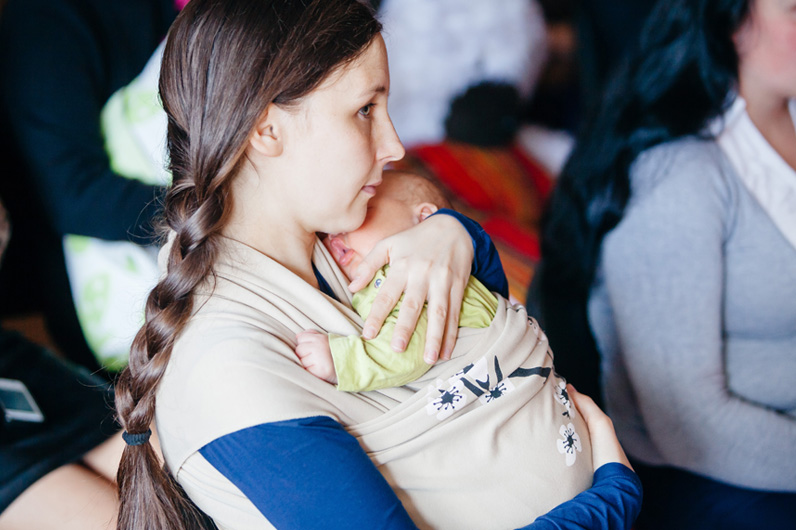
Mothers commonly present at evacuation centres by themselves or with multiple children. Image: UNICEF. Available under Creative Commons Attribution 2.0 Generic license (https://creativecommons.org/licenses/by/2.0/deed.en)
Continuing care needs of infants
The continuing needs of infants for physical and emotional care presents a challenge for mothers during disasters. During the 2019–20 bushfires, dealing with feeding and nappy changes of infants during evacuations was difficult. Mothers who, if driving to evacuate, had to choose to stop and meet these needs or unbuckle their infant while travelling or continue to travel and leave their infant to cry (Gribble et al. 2023a). Breastfeeding was considered as protective, providing safe food, hydration and comfort but was also a source of distress for women who lacked confidence in their ability to breastfeed (Davis et al. 2024; Gribble et al. 2023a). Dehydration and busyness contributed to reduced breastfeeds and genuine milk supply decline for some women (Gribble et al. 2023a). Feeding their infant and not adequately feeding themselves resulted in significant weight loss for a breastfeeding mother in one study (Gribble et al. 2023a). Access to breastfeeding support was not always available nor a priority, as one evacuation centre worker described
…when you come forward with a request like that, they’re like, ‘That’s not on our priority list’. And you’re thinking, ‘Oh actually it should be. It’s got to be on someone’s priority list if this baby can’t feed’.
Gribble et al. (2023a, p.37)
Disruption of food supplies and lack of access to amenities like power and hot water presented difficulties for mothers who were formula feeding their infants (Davis et al. 2024; Gribble et al. 2023a). Frantically seeking resources like infant formula was time consuming and a source of great stress and women were sometimes placed in circumstances where they had to undertake unsafe practices like washing bottles in unhygienic toilet sinks or not washing them at all. This is particularly concerning for younger infants (Gribble et al. 2023a). The health effects for children and the associated distress for mothers in such circumstances may be significant. Newby (2018) considered factors associated with illness in children following the 2011 Brisbane floods and Cyclone Yasi found that infants who were formula fed were nearly 10 times more likely to be taken for medical treatment after the disaster than breastfed infants. A lack of resources for safe preparation of appropriate infant foods and fluids was also associated with infant hospitalisation (Newby et al. 2012). Although not widely studied, the presence of breastfeeding women during disasters may be protective and this was recognised when, during the 2011 Brisbane floods and Cyclone Yasi, a number of women breastfed infants other than their own as an emergency measure (Newby et al. 2012).
Bushfire smoke exposure
Mothers in bushfires are often worried about the effect of smoke on their infants. During the 2019–20 bushfires, the smoke was so thick in areas that infants could not breathe or feed properly and would come off the breast to gasp for air (Gribble et al. 2024; Davis et al. 2024; Stevenson 2020). Information was lacking on the effects of smoke on very young children and what to do to protect them. The evacuation of Mallacoota in Victoria in early 2020 saw adults, older children and pets rescued by the Australian Navy but pregnant women and those with babies and toddlers were left behind in the heavy smoke because they could not climb a rope ladder onto the ship (Topsfield 2020). It was a number of days before they could be evacuated by helicopter during which time they endured extremely thick smoke. Fortunately, contamination of breastmilk by bushfire smoke is a rare concern (Beyene et al. 2023) and testing of breastmilk of smoke-exposed women identified contamination did not reach levels thought to be concerning for infant health.
Physical impediments of caring for an infant
Similar to being pregnant, caring for an infant or very young child can impede physical escape such as was described during the flash flooding of the Lockyer Valley in 2011 (Pascoe et al. 2023). During the 2019–20 bushfires, one mother who had evacuated alone to a surf club with her newborn and toddler described being the last person to evacuate this venue when it too came under threat from the fires (Gribble et al. 2023a). Her baby was born via caesarean section and she was (as a result) unable to carry her toddler. Another mother with a newborn and toddler did not evacuate her home when advised to as she thought it was too difficult. She said that she would stay until there was ‘an immediate threat’ (Gribble et al. 2024). Just how she would then have managed escape is unclear. These accounts outline the very real threat to life that may be faced by mothers with infants in disaster events.
Caring for an infant and continuing to meet their needs and sometimes also the needs of other children makes obtaining resources and support and actions such as queuing and completing paperwork or undertaking clean-up activities more physically and emotionally challenging (Gribble et al. 2023a).
Health care access issues
The needs of new mothers for health support continues beyond the acute disaster period. However, health and family support workers in rural and remote areas may also be affected by the disaster and services may be closed (Hine et al. 2023). Being cut off from health care due to such isolation is a fear of mothers of infants (Carter et al. 2024) as they may need more health care and support than usual. Women may also be emotionally isolated. Following the 2019–20 bushfires, one mother said, ‘I had no one around. There were many days where my husband was doing overtime to support people that needed help but then couldn't be there for us’ (Hamrosi and Gribble 2025).
Mothers of infants and young children experienced distress, including high rates of sadness, anxiety and being overwhelmed (Hamrosi and Gribble 2025). However, even when they were struggling psychologically, many women with young children did not seek mental health support because they did not have childcare or they were too overwhelmed to do so (Hamrosi and Gribble 2025). Family and child health nurses described how their telephone calls to mothers were longer than usual after the bushfires and how women would attend mothers’ groups early to speak privately with them (Hine et al. 2023). These nurses emphasised the importance of being empathetic and stated that supporting community connectedness to reduce loneliness was needed post-disaster (Hine et al. 2023). They also said that enhanced mental health support for mothers should be provided immediately after the disaster and extend for 2 years (Hine et al. 2023).
General practitioners also are an important support for new mothers during such times and should proactively enquire as to their wellbeing when they attend for care for their children or physical health needs and allow more time for consultations (Hamrosi and Gribble 2025). Unfortunately, specific recovery interventions for pregnant women and new mothers, including to support their psychological wellbeing and child caregiving, is lacking in Australia (Gribble et al. 2024).
Shared disaster experiences of pregnant women and new mothers
Cross-cutting themes identified in this study relating to experiences of pregnant women and new mothers were domestic violence, their role as emergency responders and effects of disadvantage.
Domestic violence
Studies by Parkinson and Zara (2013) and Parkinson (2017) established that there is a rise in domestic violence initiation and escalation following disaster events. Pregnancy and new motherhood are likewise a time when domestic violence commences or increases (O'Doherty et al. 2015). Australian research considering the interaction of disaster events and pregnancy on domestic violence perpetration and experiences is lacking. However, outside of emergencies, the highest rate of detection of domestic violence in any health setting is during antenatal care provision (O'Doherty et al. 2015). Similarly, rural family and child health nurses working in post-disaster settings describe how their mothers’ groups became a legitimate reason for women to leave the farm in situations of coercive control (Hine et al. 2023). Continuation of maternity and family and child health nursing services during and after disasters is important from a domestic violence standpoint as well as for the physical and mental health of women and children.
Pregnant women and new mothers as emergency responders
Pregnant women and mothers of infants and young children may be involved in emergency or essential services during and after disasters. Smith et al. (2018) considered the attitudes of paramedics and community members in Victoria and showed that there was no expectation that pregnant paramedics had a duty to treat others during disasters. Aligned with this, the ACT Government Service Standard 3.1.12 provides for pregnant or breastfeeding ACT Rural Fire Service volunteers to continue or not in a frontline operational role with informed decision-making and medical assessment in the final 6 weeks of pregnancy (ACT Government 2021). However, such consideration may not be applied in other services. For example, Gribble et al. (2023a) reported a pregnant health worker in an area severely affected by the 2019–20 bushfires sought to evacuate due to smoke and a high-risk pregnancy but was reprimanded for seeking to leave. In addition, health workers were separated from their children when they attended work and were unable to return home because of bushfire-related road closures.
Influence of disadvantage on women’s disaster experiences
Women who are disadvantaged due to socio-economic status or rural or remote location are exposed to greater adverse consequences in disasters. Those who are socio-economically disadvantaged may be living in areas of higher risk (e.g. more susceptible to flooding such as in Lismore, New South Wales (O’Dell et al. 2023)) or in housing that is ‘leakier’ and allows easy smoke entry during fires. After a disaster, obtaining rental housing can be a greater challenge for those with less financial resources (O’Dell et al. 2023). Women who experience socio-economic disadvantage are more likely to have adverse birth outcomes related to bushfire smoke exposure (Nyadanu et al. 2024). This may be connected to these women being more likely experience other health risks such as having a poorer diet or being a smoker (Nguyen et al. 2023). Those with less social and financial resources may be unable to take actions like travelling interstate to family or friends or be able to get air filters, camping equipment, generators or caravans that may buffer the effects (Gribble et al. 2023a; Davis et al. 2024).
Disasters in Australia also occur in rural and remote areas where health services are less extensive and access to specialist pregnancy and neonatal care can be difficult to obtain (Parayiwa et al. 2022; UNICEF 2023). Pregnant women and new mothers in rural and remote areas should therefore also be considered as more vulnerable in disasters because of the lack of breadth and depth in health services available to them. Enhanced training should be provided to maternal and child health staff in these areas with dedicated, targeted resources for rural and remote areas (Hine et al. 2023). Family and child health nurses also identify women with a disability or pre-existing health challenges, Indigenous women, young mothers, women with partners who are incarcerated and women experiencing domestic violence as needing additional support in emergencies (Hine et al. 2023).
Improving emergency management for pregnant women and new mothers
The concept of intersectionality assists in the consideration of the specific needs of pregnant women and new mothers. Intersectionality highlights the ways in which different systems of inequality interact with one another (Bastos et al. 2018). It is known that women can be disproportionately affected by disasters (Chowdhury et al. 2022) and that pregnancy and caring for children makes these events more challenging. Through their intersectional status as both women and parents, mothers face compounded disadvantage. This is magnified for mothers of infants due to the intense care needs and because they are overwhelmingly the infant’s primary caregiver. Article 25 of the Universal Declaration of Human Rights states that, ‘Motherhood and childhood are entitled to special care and assistance’ (United Nations 1948, p.76). It is clear that improvement in Australia’s disaster and emergency management is needed to ensure appropriate support to pregnant women and new mothers.
In Australia, there is still lack of knowledge by governments as to the experiences and needs of pregnant women and new mothers and this prevents adequate emergency planning and response. The usual methods of information gathering post-disaster have not engaged well with these women nor those supporting them. For example, of the 1,400 submissions made to the 2020 Royal Commission into Natural Disaster Arrangements, there were just 2 short submissions from women pregnant at the time and 2 from mothers of infants. No organisation or expert submission focused on the experiences and needs of pregnant women and only a handful had substantial content on the needs and experiences of infants and their caregivers (most mentions of children were incidental). The needs of pregnant women and new mothers in disasters, their suffering and the dangers they and their children faced are largely invisible in this inquiry.
It is notable that while there were 27 academic publications providing information on the experiences of pregnant women in disasters in Australia identified for this review there was limited breadth and depth in the research. Most of these studies focused on pregnancy, birth or child outcomes. Very few addressed the personal experiences of pregnant women, what their support needs were and how to provide them with support. One-quarter of these publications (6) were from a single study. Similarly, there were very few publications on the experiences of mothers of infants during disasters. However, it is encouraging that since the 2019–20 bushfires there have been significant pieces of research on the experiences and needs of pregnant women and new mothers by Davis et al. (2024), Gribble et al. (2023a) and Hine et al. (2023).
There is evidence of a growing awareness. The Australian National Breastfeeding Strategy (COAG Health Council 2019) includes as a priority action that a national policy be developed on infant and young child feeding in emergencies and that breastfeeding support be available to mothers experiencing in emergencies. In addition, the Australian Institute for Disaster Resilience Evacuation Planning Handbook includes content on supporting pregnant women and new mothers (Australian Institute for Disaster Resilience 2023). Finally, the Australian Government has funded initiatives by Emerging Minds (2024) and the Australian Breastfeeding Association (2024a, 2024b) to develop resources for caregivers of infants during disasters. However, there are no similar initiatives for pregnant women.
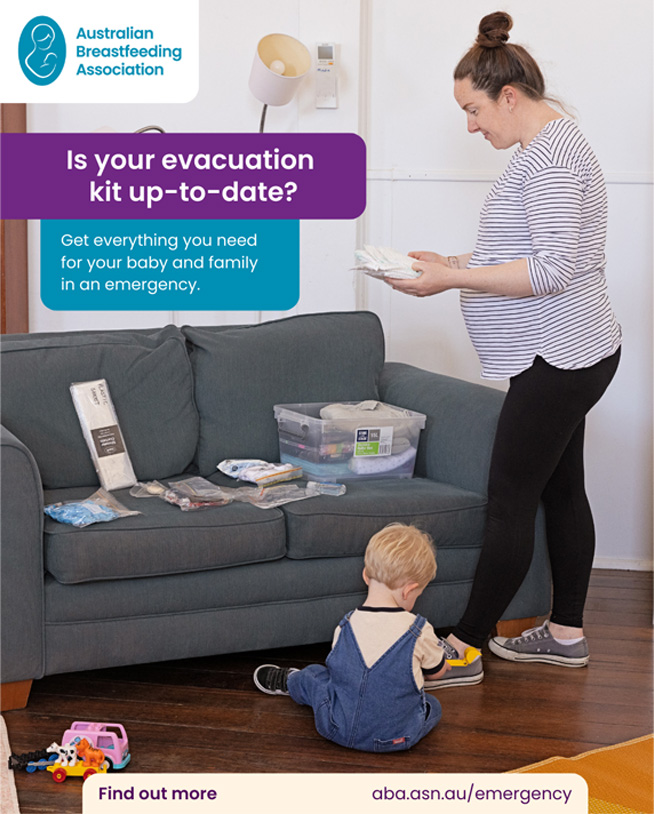
The Australian Breastfeeding Association has information about preparedness for families.
Image: Australian Breastfeeding Association
Conclusion
This review revealed that pregnancy and new motherhood profoundly affect women’s experiences during disasters. In order to assist these women and their children, support must be provided. While progress has been made and awareness is increasing, further research and specific planning and resource development will improve this situation especially if these improvements take account for the particular needs of pregnant women and mothers with infants.