


 Author
Ilan Kelman
Reviewed by
John Richardson
Published by
Oxford University Press
ISBN: 978-0-19-884135-7
‘It’s just semantics’. I hear this often when the topic comes up of disasters not being natural, so why do we persist calling them natural disasters? It is more than semantics. It is a nuanced way of looking at the root cause of disaster, which is now recognised by the United Nations Office of Disaster Risk Reduction, International Federation of Red Cross and Red Cresent Societies as well as being reflected in the Second National Action Plan for the National Disaster Risk Reduction Framework.1
Quarantelli’s (1998)2 classic definition of disaster is that it is the intersection of a hazard and a vulnerable population, which is the key to understanding this nuance. In a traditional linear risk approach to hazards, we start with the hazard and see that as the problem. What makes the population vulnerable is of a second order priority. We need to ask ourselves, how does the population become vulnerable?
On one level, using the term ‘natural disaster’ maybe be seen as not understanding vulnerability. At another level, it is actively used to abrogate responsibility. We have seen over the years that decision makers say’ ‘It was a natural disaster. There was nothing we could do about it’.
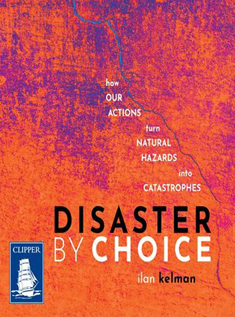
Ilan Kelman’s short book, Disaster by Choice, helps us understand this challenge by placing the responsibility squarely at the feet of humans. He recognises that the processes that cause hazards may be natural, extreme weather or geological processes, but it is not necessarily what causes harm. Humans have made decisions to settle on flood plains, or change water courses, or increase concrete in urban areas, or not to build buildings to cyclone or earthquake building codes. These are the factors that expose populations to the risk and threat of the hazard. That is ‘disaster by choice’.
Kelman starts the book by forensically analysing the Haitian earthquake in 2010. The collapse of buildings, the collapse of systems and infrastructure, the outbreak of disease and the long-term effects of the earthquake. The horror of that cataclysmic event sets the scene and asks the questions: what we are seeing here, can it be applied elsewhere? The answer is yes. Kelman proceeds to unpack the nature of hazards, vulnerabilities and poses to us what needs to be done. What choices can we make to make the changes needed to reduce disaster risk.
This is an easy-to-read book with excellent examples. I would highly recommend policy makers and journalists read this book so we can start to shift the narrative. It’s only dropping one word from a sentence, but over time, could have significant influence on how we think about disaster risk. We could move away from being disasters being ‘natural’ and not being able to do anything about them, to being firmly in control of how we manage and mitigate disasters. The outcome is that people can live their lives with reduced risk and exposure to natural hazard events.